
XSY ISO 639-3
Saisiyat
SaySiyat Autonym
A language of China–Taiwan
- ISO 639
- xsy
- Alternate Names
- Amutoura, Bouiok, Saiset, Saisett, Saisiat, Saisiett, Saisirat, Saisyet, Saisyett, Saixia, Seisirat
- Autonym
- SaySiyat
- Population
- 2,000 (2015 CIP). Tungho: more active use. Taai: a few speakers; nearly assimilated into Atayal [tay]. Ethnic population: 6,730 (2020 CIP).
- Location:
- Miaoli county: Nanchuang and Shihtan townships; Hsinchu county: Wufeng township. Western mountains.
- Language Status
- 7 (Shifting).
- Classification
- Austronesian, Northwest Formosan
- Dialects
- Taai (North Saiset), Tungho (South Saiset). Dialect differences are mainly phonological and lexical (1978 P. Li).
- Typology
- SVO, VSO; prepositions; personal and common nouns; case-marking (6 cases); aspect; 16 consonants and 6 vowels; stress usually on the final syllable; inclusive/exclusive pronouns.
- Language Use
- Adults only. Very few under 45 can speak the language fluently (Zeitoun et al 2015). Positive attitudes. All shifting to Atayal [tay], from northern dialect (Wurm 2007). Many shifting to Hakka Chinese [hak], from southern dialect (Wurm 2007).
- Language Development
- Grammar. The Saisiyat people have initiated a revitalization movement under governmental initiatives (Zeitoun et al 2015).
- Language Resources
- OLAC resources in and about Saisiyat
- Writing
- Latin script [Latn].
Also Spoken in
Map
Location: Miaoli county: Nanchuang and Shihtan townships; Hsinchu county: Wufeng township. Western mountains.
Size and Vitality
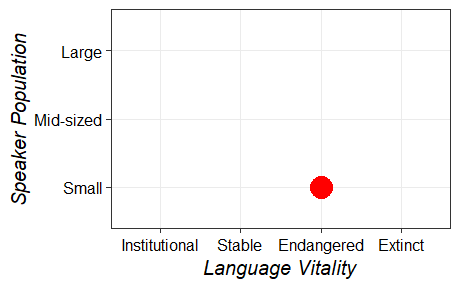 Click to enlarge with explanation
Place in Language Cloud
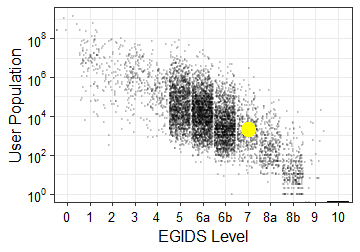 Click to enlarge with explanation