
XSL ISO 639-3
Slavey, South
Deh Gáh Ghotie Zhatie Autonym
A language of Canada
- ISO 639
- xsl
- Alternate Names
- Acha’otinne, Dene, Dene Tha’, Denetha, Dené, Esclave du Sud, Mackenzian, “Slave” (pej.), “Slavi” (pej.)
- Autonym
- Deh Gáh Ghotie Zhatie
- Population
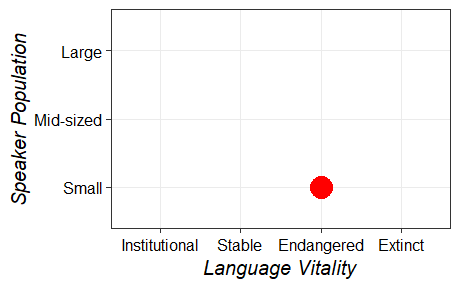
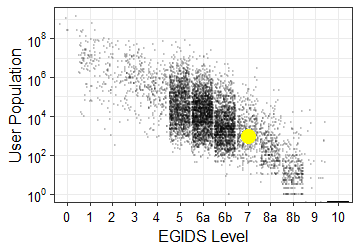
- 950 (2016 census). Ethnic population: 3,600 (1995 M. Krauss).
- Location:
- Alberta province: Hay River area and Steen River-May Creek watershed; British Columbia province: Fort Nelson-Snake river area; Northwest Territories: Mackenzie district, Great Slave Lake, upper Mackenzie River.
- Language Status
- 7 (Shifting). Statutory language of provincial identity in NWT (1988, NWT Official Languages Act, Chapter 56 (Supplemented), Section 4), restricted official use. Language of recognized indigenous peoples: Acho Dene Koe, Deh Gáh Got’ie Dene, Dene Tha’, Fort Nelson, Jean Marie River, K’atlodeeche, Ka’a’gee Tu, Liidlii Kue, Pehdzeh Ki, Ross River, Sambaa K’e, West Point, Yellowknives Dene.
- Classification
- Eyak-Athabaskan, Athabaskan, Northern Athabaskan, Slavey-Hare
- Dialects
- In North [scs] and South Slavey dialect continuum which includes Hare, Bear Lake, Mountain, South Slavey, northern Alberta Slavey and Fort Nelson Slavey. A member of macrolanguage Slave [den].
- Language Use
- Older people still use South Slavey in smaller, isolated communities; serious attrition among children and young people. All shifting to English [eng].
- Language Development
- Literacy rate in L2: 25%–50%. Dictionary. Grammar. NT: 1891.
- Language Resources
- OLAC resources in and about Slavey, South
- Writing
- Latin script [Latn]. Unified Canadian Aboriginal Syllabics script [Cans], no longer in use.
Also Spoken in
Map
Location: Alberta province: Hay River area and Steen River-May Creek watershed; British Columbia province: Fort Nelson-Snake river area; Northwest Territories: Mackenzie district, Great Slave Lake, upper Mackenzie River.
Size and Vitality
 Click to enlarge with explanation
Place in Language Cloud
 Click to enlarge with explanation