
XSB ISO 639-3
Sambal
Sambalì Autonym
A language of Philippines
- ISO 639
- xsb
- Alternate Names
- Sambali, “Tina” (pej.), “Tina Sambal” (pej.)
- Autonym
- Sambalì
- Population
- 70,000 (2000 SIL), decreasing. No monolinguals. Ethnic population: 70,000.
- Location:
- Central Luzon region: Tarlac province, western border; Ilocos region: Pangasinan province, 2 villages; MIMAROPA region: Palawan province, Quezon municipality, Panitian village; north Zambales province, 5 towns.
- Language Status
- 7 (Shifting). De facto language of provincial identity in Zambales province.
- Classification
- Austronesian, Malayo-Polynesian, Central Luzon, Sambalic
- Dialects
- Santa Cruz, Masinloc, Iba. 70% intelligibility with Botolan [sbl].
- Language Use
- Youth start using it at work if they do not go on to higher education; little use among children. Not used around outsiders, but they like it when outsiders learn Sambal. All domains among adults. Oral use in local commerce, occasional use in religion and political campaigning. Some letter-writing. Adults only. Shifting to Filipino [fil]. Some also use Ilocano [ilo].
- Language Development
- Literacy rate in L1: 98%. Literacy rate in L2: 98%. Orthography similar to Filipino [fil]. English and Filipino taught in school. Taught in primary schools, in Zambales. Literature. Newspapers. Radio. Videos. Dictionary. Texts. NT: 1999–2000.
- Language Resources
- OLAC resources in and about Sambal
- Writing
- Latin script [Latn].
- Other Comments
- Christian.
Also Spoken in
Map
Location: Central Luzon region: Tarlac province, western border; Ilocos region: Pangasinan province, 2 villages; MIMAROPA region: Palawan province, Quezon municipality, Panitian village; north Zambales province, 5 towns.
Size and Vitality
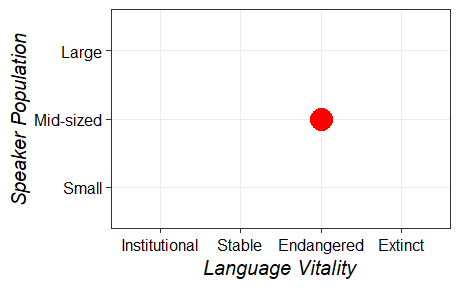 Click to enlarge with explanation
Place in Language Cloud
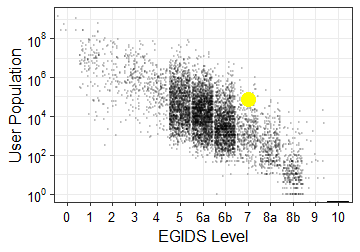 Click to enlarge with explanation