
TXU ISO 639-3
Kayapó
Mẽbêngôkre kabẽn Autonym
A language of Brazil
- ISO 639
- txu
- Alternate Names
- Cayapo, Kokraimoro, Mebêngokrê, Put Karot
- Autonym
- Mẽbêngôkre kabẽn
- Population
- 7,270 (Crevels 2012). 19 communities in regular contact with outsiders; also 3–4 isolated Kayapó groups of 30–100 people (Crevels 2007). 3,950 monolinguals. Ethnic population: 7,270 (Crevels 2012).
- Location:
- Mato Grosso and Pará states: Xingú Park, both sides of Xingú river, west up to the Iriri and tributaries; west bank to Fresco and Zinho rivers; 14 villages.
- Language Status
- 5 (Developing).
- Classification
- Jean, Northern
- Dialects
- Xikrin (Diore, Xukru), Kararaó, Kayapó-Kradaú. Dialects only slightly different from village names.
- Typology
- SOV; 16 consonants and 17 vowels, including 7 nasal vowels.
- Language Use
- Vigorous. All domains, including initial education. Used by all. Positive attitudes. A few also use Portuguese [por]. Used as L2 by Panará [kre].
- Language Development
- Literacy rate in L1: 5%–10%. Literacy rate in L2: 5%–15%. 400 readers, 100 can write. Taught in primary schools. Literature. Grammar. NT: 1996.
- Language Resources
- OLAC resources in and about Kayapó
- Writing
- Latin script [Latn].
- Other Comments
- The village names sometimes listed as dialects are: Txukuhamai (Txucarramãe), Gorotire, Kube-Kran-Kenh (Cabeca Pelada), Kokraimoro, Menkragnotire (Mentuktire, Kuben-Kragnotire, Gente Preta, Kubenkrangnoti, Kubenkrankegn, Menkrangnoti), Pacajá, and others. Traditional religion, Christian.
Also Spoken in
Map
Location: Mato Grosso and Pará states: Xingú Park, both sides of Xingú river, west up to the Iriri and tributaries; west bank to Fresco and Zinho rivers; 14 villages.
Size and Vitality
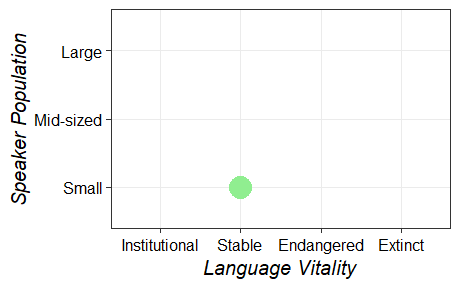 Click to enlarge with explanation
Place in Language Cloud
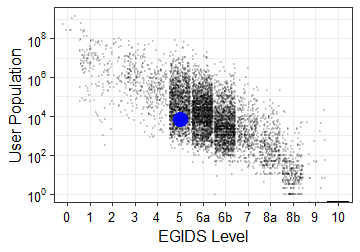 Click to enlarge with explanation