
TUV ISO 639-3
Turkana
Ng’aturkana Autonym
A language of Kenya
- ISO 639
- tuv
- Alternate Names
- Buma, Bume, Turkwana
- Autonym
- Ng’aturkana
- Population
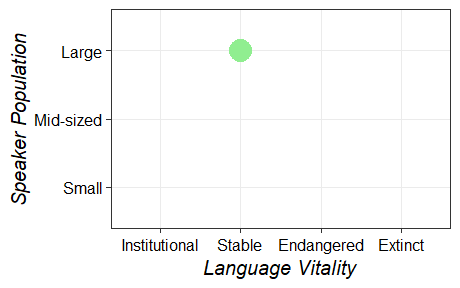
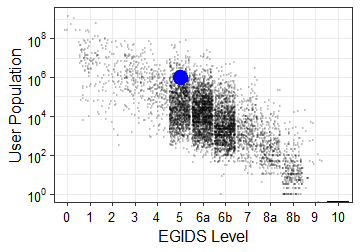
- 1,020,000 (2019 census). , based on ethnicity. 593,000 monolinguals.
- Location:
- Samburu and Turkana counties: west and south of Lake Turkana.
- Language Status
- 5 (Developing).
- Classification
- Nilo-Saharan, Satellite-Core, Core, Eastern Sudanic, Southern (n languages), Nilotic, Eastern, Lotuxo-Teso, Teso-Turkana, Turkana
- Dialects
- Northern Turkana, Southern Turkana. Inherently intelligible of Toposa [toq] speakers, but hostile to them. Partially intelligible of Ng’aKarimojong [kdj], Jie [kdj], and Nyangatom [nnj], but all 5 are ethnically distinct. A few phonological, lexical, and discourse marker differences between them. Northern Turkana [tuv] and Eastern Toposa [toq] are reportedly more similar to Southern Turkana [tuv], but Western Toposa [toq] is further apart linguistically. The 4 varieties form a subgroup divided in the middle by the Kenya-Sudan border. Lexical similarity: 85% similarity with Ng’aKarimojong [kdj], 76% with Ateso [teo].
- Typology
- VSO; highly inflectional; grammatical tone; vowel harmony; voiceless vowels.
- Language Use
- Vigorous. Home, social gatherings. Used by all. Some also use English [eng]. Some also use Swahili [swh], and this is increasing. Also use Daasanach [dsh]. Also use Pökoot [pko].
- Language Development
- Literacy rate in L1: 5%–10%. Literacy rate in L2: 25%–50%. Grammar. Bible: 2001.
- Language Resources
- OLAC resources in and about Turkana
- Writing
- Latin script [Latn].
- Other Comments
- A few Somali and Gikuyu have shops in the area. Semi-nomadic. Unfriendly to other nomadic tribes due to rivalry over livestock. Traditional religion, Christian.
Also Spoken in
Map
Location: Samburu and Turkana counties: west and south of Lake Turkana.
Size and Vitality
 Click to enlarge with explanation
Place in Language Cloud
 Click to enlarge with explanation