
TMK ISO 639-3
Tamang, Northwestern
A language of Nepal
- ISO 639
- tmk
- Alternate Names
- Kath-Bhotiya, Lama Bhote, Murmi, Rongba, Sain, Tamang Gyoi, Tamang Gyot, Tamang Lengmo, Tamang Tam
- Population
- 67,200 (2011 census), increasing. Population for all Tamang varieties: 1,350,000 (2011 census).
- Location:
- Bagmati province: Nuwakot district, central mountainous strip.
- Language Status
- 6a (Vigorous). Language of recognized indigenous nationality: Tamang.
- Classification
- Sino-Tibetan, Tibeto-Burman, Western Tibeto-Burman, Bodish, West Bodish, Gurung-Tamang, Tamang
- Dialects
- Dhading. All Western Tamang varieties have high mutual intelligibility. Lexical similarity: 94% with Western Trisuli Tamang [tdg], 82%–83% with Western Rasuwa Tamang [tdg], 76%–77% with Eastern Gorkha Tamang [tge], 72%–80% with Eastern Tamang [taj].
- Typology
- SOV; postpositions; noun head both initial and final; no noun classes or gender; no prefixes, up to 4 suffixes; clause constituents indicated by case-marking; ergativity; genitives after noun head; relatives before noun head; question word medial; tense and aspect; no passives or voice; CV, CVC, CCV, V, CCVC, CVCCC; tonal; 25 consonant and 5 vowel phonemes.
- Language Use
- Home; mixed use: Friends, religion, work, education. Used by all. Positive attitudes. Also use Central Tibetan [bod], in religious contexts. Also use Nepali [npi], in official contexts.
- Language Development
- Literacy rate in L1: 1%–10%. Literacy rate in L2: 25%–75%. Taught in primary schools. Literature. Newspapers. Periodicals. Radio. Dictionary. Texts.
- Language Resources
- OLAC resources in and about Tamang, Northwestern
- Writing
- Devanagari script [Deva].
- Other Comments
- Traditional religion, Buddhist.
Also Spoken in
Map
Location: Bagmati province: Nuwakot district, central mountainous strip.
Size and Vitality
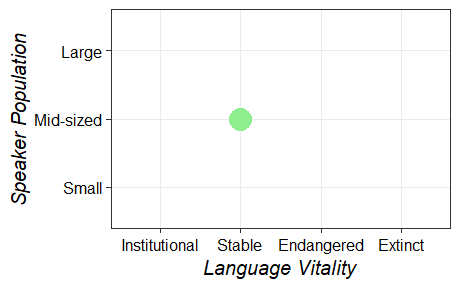 Click to enlarge with explanation
Place in Language Cloud
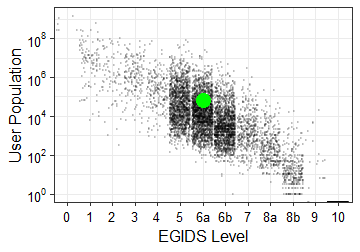 Click to enlarge with explanation