
TJI ISO 639-3
Tujia, Northern
A language of China
- ISO 639
- tji
- Alternate Names
- Tuchia, Tudja, pi tsi kha
- Population
- 70,000 (Brassett and Brassett 2005). 100 monolinguals. Ethnic population: 8,350,000 (2010 census). Includes Southern Tujia [tjs].
- Location:
- Chongqing province: southeast; Guizhou province; Hubei province: southwest; Hunan province: Yanhe and Yingjiang counties. Wuling mountain range.
- Language Status
- 7 (Shifting). Language of recognized nationality: Tujia.
- Classification
- Sino-Tibetan, Tibeto-Burman, Northeastern Tibeto-Burman, Tujia
- Dialects
- Longshan, Baojing. Northern and Southern Tujia [tjs] are not mutually intelligible. Lexical similarity: 40% with Southern Tujia [tjs].
- Typology
- SOV; tonal, 4 tones; no voiced stops or affricates.
- Language Use
- Regularly used but increasingly the young prefer to speak Chinese and are encouraged by their parents. In most areas children acquire a passive knowledge only. No longer used in southeastern Sichuan, northeastern Guizhou and southwestern Hubei provinces. No longer used or moribund in northwestern Hunan and severely endangered in the remaining areas (Bradley 2007a). All domains. Adults only. Shifting to Mandarin Chinese [cmn]. Written Chinese in use and used in schools. Also use Hmong Njua [hnj].
- Language Development
- Literacy rate in L2: 88% in Chinese (2000 census, Tujia nationality). Grammar.
- Other Comments
- Traditional religion, Buddhist.
Also Spoken in
Map
Location: Chongqing province: southeast; Guizhou province; Hubei province: southwest; Hunan province: Yanhe and Yingjiang counties. Wuling mountain range.
Size and Vitality
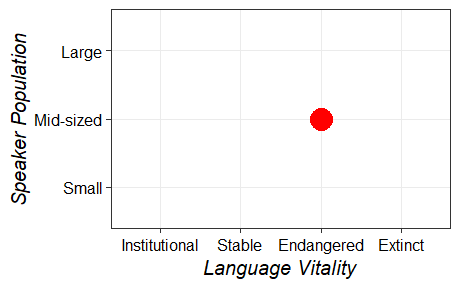 Click to enlarge with explanation
Place in Language Cloud
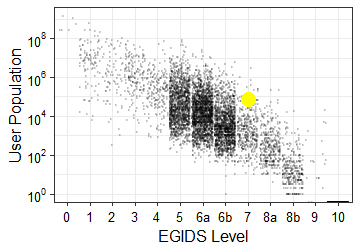 Click to enlarge with explanation