
TIG ISO 639-3
Tigré
ትግራይት (Tigrayit/Tigraayit) Autonym
A language of Eritrea
- ISO 639
- tig
- Autonym
- ትግራይት (Tigrayit/Tigraayit)
- Population
- 1,340,000 in Eritrea (2020), increasing. Total users in all countries: 1,359,000.
- Location:
- Anseba, Gash-Barka, and Northern Red Sea regions. Widespread except in Southern Red Sea region.
- Language Status
- 4 (Educational).
- Classification
- Afro-Asiatic, Semitic, South, Ethiopian, North
- Dialects
- Mansa’ (Mensa), Habab, Beni-Amir, Semhar, Algeden, Senhit (Ad-Tekleis, Ad-Temariam, Bet-Juk, Marya Kayah, Mensa), Dahalik. Between dialects (except Dahalik) intelligibility is above 91% (Idris 2005); between Dahalik and the other dialects 24%–51% (Idris 2010). Lexical similarity: 71% with Ge’ez [gez], 64% with Tigrigna [tir] (Bender, M. 1971). Intelligibility of Dahalik undetermined, Tigre dialectical lexical similarity is 86%–97% (Idris 2005); 55%–60% with Dahalik and other Tigre dialects (Idris 2010).
- Typology
- SOV.
- Language Use
- All domains. Used by all. Somewhat positive attitudes. Formerly they favored Arabic [arb]. Also use Sudanese Spoken Arabic [apd]. Also use Ta’izzi-Adeni Spoken Arabic [acq]. Also use Tigrigna [tir]. Used as L2 by Bilen [byn], Nara [nrb], Saho [ssy], Tigrigna [tir].
- Language Development
- Literacy rate in L1: Females: about 30%. Taught in primary schools. Fully developed. Bible: 1988.
- Language Resources
- OLAC resources in and about Tigré
- Writing
- Arabic script, Naskh variant [Arab]. Ethiopic script [Ethi], used since 1889, not written in Sudan.
- Other Comments
- Spoken by some Beni-Amer called Lobot. Other ethnic groups are Ad Aha, Geden Sikta, Iddifer, and Teroa Beit Mushe. Believed by some to be the direct linguistic descendant of Ge’ez [gez]. Incorrectly called Ge’ez. Muslim, Christian.
Also Spoken in
- Location
- Red Sea state: Tokar and Garora regions; Gedaref and Kassala states.
- Language Status
- 6b (Threatened) View other languages of Sudan
Language Name
Tigré
User Population
19,000 in Sudan (2017).
Map
Location: Anseba, Gash-Barka, and Northern Red Sea regions. Widespread except in Southern Red Sea region.
Size and Vitality
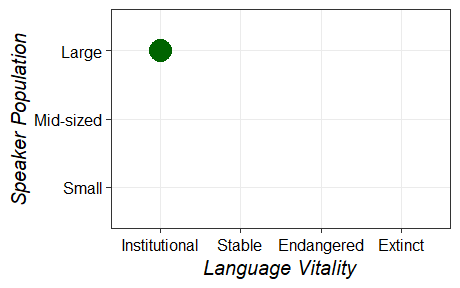 Click to enlarge with explanation
Place in Language Cloud
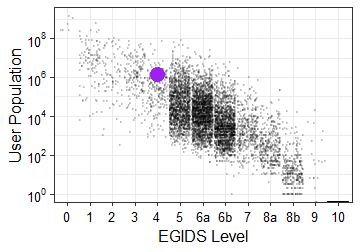 Click to enlarge with explanation