
TBK ISO 639-3
Tagbanwa, Calamian
Tinagbanwa Autonym
A language of Philippines
- ISO 639
- tbk
- Alternate Names
- Kalamian Tagbanwa, Kalamianon, “Unggoy” (pej.)
- Autonym
- Tinagbanwa
- Population
- 10,000 (2007 SIL), increasing. Ethnic population: 10,000.
- Location:
- MIMAROPA region: north Palawan province, Busuanga, Coron, Culion, and Linapacan municipalities (Calamian and Linapacan groups); Palawan Island northeast coast, 3 Tagbanwa communities.
- Language Status
- 5 (Developing).
- Classification
- Austronesian, Malayo-Polynesian, Kalamian
- Dialects
- Baras, Kinalamiananen (Kinaramiananen), Binuswanganen, Tinalaanen, Inawanwaanen, Lininipaknen, Binatuanen. Baras dialect on Palawan Island 94% intelligibility with Calamian Tagbanwa. Lexical similarity: 80% with Calamian and Baras dialects; typologically unusual phenomenon with regard to pronoun ordering and marking.
- Typology
- VSO; 3 tense-aspects: past, future, and timeless. 16 consonants, 4 vowels; unusual pronoun ordering and marking (Ruch and Quakenbush 2006).
- Language Use
- Vigorous, except with inter-marriage with non-Tagbanwas. Home, church, neighborhood, work sites. Used by all. Mixed attitudes. Attitudes are positive among themselves, but negative around others. Also use Tagalog [tgl]. Used as L2 by Cuyonon [cyo].
- Language Development
- Literacy rate in L1: 40%–50%. Literacy rate in L2: 40% in Tagalog [tgl]. Fluency training much needed (2007 SIL). Literature. Texts. NT: 2009.
- Language Resources
- OLAC resources in and about Tagbanwa, Calamian
- Writing
- Latin script [Latn], primary usage. Tagbanwa script [Tagb].
- Other Comments
- Christian.
Also Spoken in
Map
Location: MIMAROPA region: north Palawan province, Busuanga, Coron, Culion, and Linapacan municipalities (Calamian and Linapacan groups); Palawan Island northeast coast, 3 Tagbanwa communities.
Size and Vitality
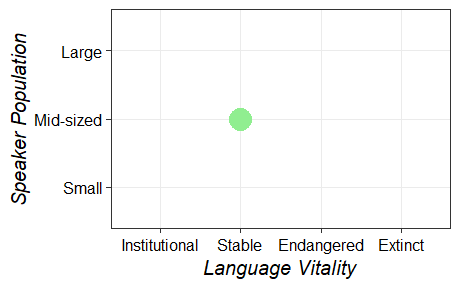 Click to enlarge with explanation
Place in Language Cloud
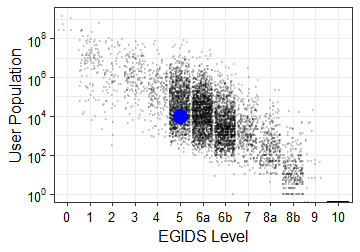 Click to enlarge with explanation