
SSI ISO 639-3
Sansi
A language of India
- ISO 639
- ssi
- Alternate Names
- Bhilki, Sansiboli
- Population
- 60,000 in India (Gusain 2002). Total users in all countries: 80,000.
- Location:
- Haryana state: Sirsa district; Punjab state: Bathinda and Muktsar districts; Rajasthan state: Hanumangarh district; scattered elsewhere in Delhi, Himachal Pradesh, Jammu and Kashmir, Karnataka, Madhya Pradesh, and Uttar Pradesh states.
- Language Status
- 7 (Shifting).
- Classification
- Indo-European, Indo-Iranian, Indo-Aryan, Western Hindi, Hindustani, Sansi
- Dialects
- Intermediate between Eastern Punjabi [pan] and Hindustani (see Hindi [hin]). Sometimes identify themselves as Marwari [rwr]. Related to Rajasthani [mwr], Sindhi [snd], Eastern Punjabi. Lexical similarity: 71% with Urdu [urd], 83% with the Sochi dialect of Sansi [ssi](1998). Numerous phonological and morphological borrowings from Eastern Punjabi [pan], Hindi [hin], and Gujarati [guj] (Gusain 2002).
- Language Use
- Not being passed on to the next generation. Much mixing of Hindi [hin], Eastern Punjabi [pan], or Gujarati [guj] (Gusain 2002). Home only. Adults only. Some shifting to Eastern Punjabi [pan]. Some shifting to Gujarati [guj]. Some shifting to Hindi [hin].
- Language Development
- Literacy rate in L2: Below 5%.
- Language Resources
- OLAC resources in and about Sansi
- Writing
- Unwritten [Qaax].
- Other Comments
- Bhils by caste. Called a Gypsy language. They have an argot called Farsi. Gusain (2002) classifies this as a Rajasthani dialect. Socially separate from surrounding groups. Governed by their own social norms and economy. Losing some tribal characteristics but are not yet integrated into the national mainstream (Gusain 2002). Hindu.
Also Spoken in
- Location
- Sindh province: Karachi.
- Dialects
- Sochi.
- Language Status
- 6b (Threatened)
- Other Comments
- Non-indigenous. Bhils by caste. Immigrated from India in 1947. Hindu, Muslim. View other languages of Pakistan
Language Name
Sansi
User Population
20,000 in Pakistan (2018).
Map
Location: Haryana state: Sirsa district; Punjab state: Bathinda and Muktsar districts; Rajasthan state: Hanumangarh district; scattered elsewhere in Delhi, Himachal Pradesh, Jammu and Kashmir, Karnataka, Madhya Pradesh, and Uttar Pradesh states.
Size and Vitality
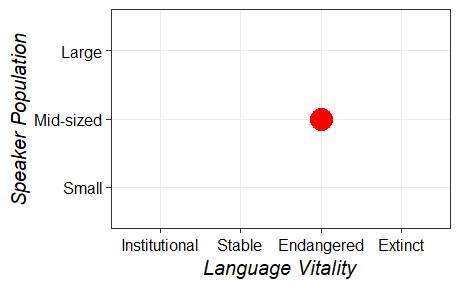 Click to enlarge with explanation
Place in Language Cloud
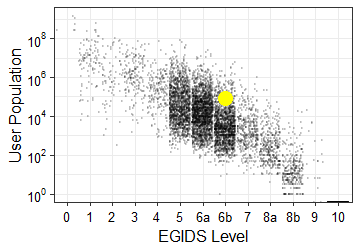 Click to enlarge with explanation