
SLP ISO 639-3
Lamaholot
A language of Indonesia
- ISO 639
- slp
- Alternate Names
- Solor, Solorese
- Population
- 180,000 in Indonesia (2010). Total users in all countries: 225,000.
- Location:
- East Nusa Tenggara province: Flores Timur regency; also Solor island; possibly north Pantar coast, northwest Alor, and surrounding islands.
- Language Status
- 3 (Wider communication).
- Classification
- Austronesian, Malayo-Polynesian, Central-Eastern Malayo-Polynesian, Bima-Lembata
- Dialects
- West Lamaholot (Muhang, Pukaunu), Lamaholot (Ile Mandiri, Larantuka, Lewolaga, Ritaebang, Taka, Tanjung Bunda), West Solor.
- Typology
- SOV; 16 consonants and 6 vowels (3 oral, 3 nasal); serial verb constructions; inclusive/exclusive pronouns; alienable/inalienable possession (Solor dialect).
- Language Use
- The area around Larantuka is multiethnic and some people have shifted to Kupang Malay [mkn] (Florey 2005). Used as language of wider communication. Used as L2 by Adonara [adr], Alor [aol], Ile Ape [ila], Lamalera [lmr], Lamatuka [lmq], Levuka [lvu], Lewo Eleng [lwe], Lewotobi [lwt], South Lembata [lmf], West Lembata [lmj].
- Language Development
- Dictionary. Grammar.
- Language Resources
- OLAC resources in and about Lamaholot
- Writing
- Unwritten [Qaax].
- Other Comments
- ‘Lamaholot-Alor’ is used to refer to both a lingua franca and also to any of several Austronesian varieties spoken from eastern Flores to Alor. Alor [aol] is part of a chain which includes Lamaholot. Traditional religion, Christian, Muslim.
Also Spoken in
- Location
- Sabah: scattered.
- Dialects
- Solor.
- Language Status
- Unestablished
- Other Comments
- Non-indigenous. Christian. View other languages of Malaysia
Language Name
Lamaholot
User Population
45,000 in Malaysia (2015), decreasing. Ethnic population: 45,000 (2015 A. Supeno). Consulate of Indonesia.
Map
Location: East Nusa Tenggara province: Flores Timur regency; also Solor island; possibly north Pantar coast, northwest Alor, and surrounding islands.
Size and Vitality
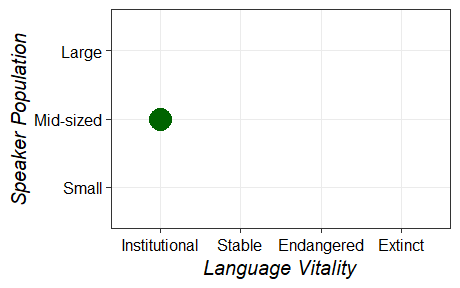 Click to enlarge with explanation
Place in Language Cloud
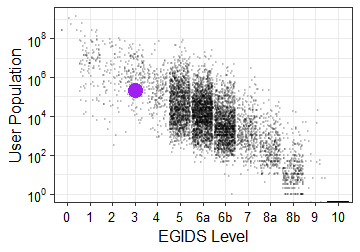 Click to enlarge with explanation