
SKN ISO 639-3
Subanon, Kolibugan
A language of Philippines
- ISO 639
- skn
- Alternate Names
- Calibugan, Kalibugan, Kolibugan
- Population
- 25,100 (2005 UNSD). Ethnic population: 40,300 (2010 census).
- Location:
- Zamboanga Peninsula region: Zamboanga del Norte province, Sulu Sea coast, Kanapun area to Liloy, also Sibuco to Siocon; Zamboanga del Sur province, Sibuguey bay head, Ipil and inland to Kabasalan; Zamboanga City, south from north provincial border to Curuan.
- Language Status
- 6a (Vigorous).
- Classification
- Austronesian, Malayo-Polynesian, Greater Central Philippine, Subanon, Eastern
- Dialects
- None known. Reportedly similar to Western Subanon [suc], but limitations on inherent intelligibility between them. Lexical and grammatical differences.
- Typology
- VSO; prepositions; genitives after noun heads; articles, adjectives, and numerals before noun heads; relatives after noun heads; question word in sentence-initial position; 2 maximum prefixes, 3 maximum suffixes; word order distinguishes given and new information, topic and comment; affixes do not indicate case of noun phrases; verb affixes mark number; ergativity; passives; causatives; comparatives; nontonal.
- Language Use
- All domains. Used by all. Positive attitudes. Also use Cebuano [ceb]. L2 acquired through public school, media and travel; L2 used in those domains.
- Language Development
- Literacy rate in L2: 65%. Texts.
- Language Resources
- OLAC resources in and about Subanon, Kolibugan
- Writing
- Latin script [Latn], used since 2005.
- Other Comments
- Culture and attitudes separate Kolibugan from Western Subanon [suc]. Muslim, traditional religion.
Also Spoken in
Map
Location: Zamboanga Peninsula region: Zamboanga del Norte province, Sulu Sea coast, Kanapun area to Liloy, also Sibuco to Siocon; Zamboanga del Sur province, Sibuguey bay head, Ipil and inland to Kabasalan; Zamboanga City, south from north provincial border to Curuan.
Size and Vitality
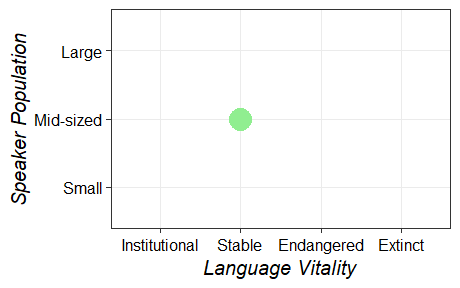 Click to enlarge with explanation
Place in Language Cloud
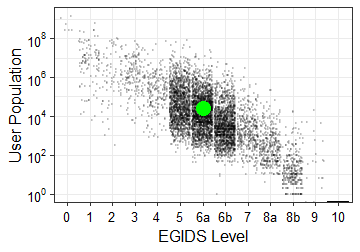 Click to enlarge with explanation