
QUZ ISO 639-3
Quechua, Cusco
Runasimi, Runasimi Qusqu Qullaw Autonym
A language of Peru
- ISO 639
- quz
- Alternate Names
- Cuzco, Cuzco Quechua, Qheswa, Qheswasimi, Quechua Cusco, Quechua Qosqo-Qollaw, Quechua de Cusco-Collao, Qusqu qhichwa simi, Qusqu runasimi
- Autonym
- Runasimi, Runasimi Qusqu Qullaw
- Population
- 1,500,000 (1989 UBS). Total Quechua in Peru 3,500,000–4,400,000 including Quechua I 750,000, Quechua II 2,680,000 (2000 W. Adelaar). 300,000 monolinguals. Ethnic population: 1,500,000.
- Location:
- Apurimac, Arequipa, Cusco, Moquegua, Madre de Dios, and Puno regions.
- Language Status
- 3 (Wider communication).
- Classification
- Quechuan, Peripheral Quechua, Chinchay, Southern Chinchay, Southern Peruvian Quechua
- Dialects
- Caylloma Quechua, Eastern Apurímac Quechua, Puno Quechua. Some dialect differences, but not as distinct as elsewhere. Substantial phonological and morphological differences with Ayacucho Quechua. A member of macrolanguage Quechua [que].
- Typology
- SOV; 28 consonants and 5 vowels.
- Language Use
- City people generally want children to speak primarily Spanish [spa]. Used by all. Most also use Spanish [spa], especially in urban areas, but also in rural areas. Used as L2 by Arequipa-La Unión Quechua [qxu].
- Language Development
- Literacy rate in L1: 1%–5%. Literacy rate in L2: 62%. Taught in primary schools. Literature. Radio. Dictionary. Grammar. Texts. Bible: 1988–2004.
- Language Resources
- OLAC resources in and about Quechua, Cusco
- Writing
- Latin script [Latn].
- Other Comments
- Christian, traditional religion.
Also Spoken in
Map
Location: Apurimac, Arequipa, Cusco, Moquegua, Madre de Dios, and Puno regions.
Size and Vitality
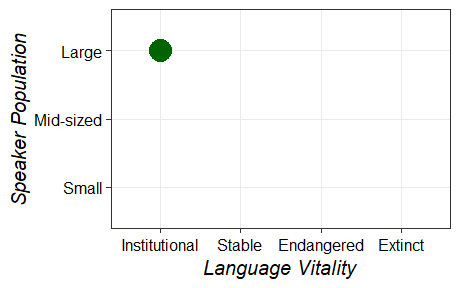 Click to enlarge with explanation
Place in Language Cloud
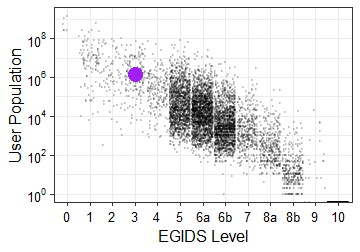 Click to enlarge with explanation