
QUH ISO 639-3
Quechua, South Bolivian
Runasimi Autonym
A language of Bolivia
- ISO 639
- quh
- Alternate Names
- Central Bolivian Quechua, Cochabamba Quechua, Quechua, Quechua Boliviano
- Autonym
- Runasimi
- Population
- 1,610,000 in Bolivia (2014 UNSD). Total users in all countries: 1,616,120.
- Location:
- Cochabamba, Chuquisaca, Oruro departments; La Paz department: except Franz Tamayo, Apolo area; mainly Potosí department; Tarija department.
- Language Status
- 5* (Developing). Recognized language (2009, Constitution, Article 5(1)).
- Classification
- Quechuan, Peripheral Quechua, Chinchay, Southern Chinchay
- Dialects
- Sucre, Cochabamba, Oruro, Potosí, Chuquisaca, Northwest Jujuy. A member of macrolanguage Quechua [que].
- Typology
- SOV; 25 consonants and 3 vowels.
- Language Development
- Dictionary. Bible: 1986–2015.
- Language Resources
- OLAC resources in and about Quechua, South Bolivian
- Writing
- Latin script [Latn].
- Other Comments
- Traditional religion, Christian.
Also Spoken in
- Location
- Buenos Aires, Jujuy, and Salta provinces.
- Dialects
- Northwest Jujuy (Colla).
- Language Status
- 8a (Moribund)
- Other Comments
- Different from Santiago del Estero [qus] (R. Nardi). View other languages of Argentina
Language Name
Quechua, South Bolivian
User Population
5,120 in Argentina (2004 census). Ethnic population: 70,500 (2004 INDEC).
- Location
- Antofagasta region.
- Language Status
- 6a (Vigorous)
- Other Comments
- Non-indigenous. View other languages of Chile
Language Name
Quechua, South Bolivian
User Population
1,000 in Chile (Crevels 2012). Ethnic population: 6,180 (Crevels 2012).
Map
Location: Cochabamba, Chuquisaca, Oruro departments; La Paz department: except Franz Tamayo, Apolo area; mainly Potosí department; Tarija department.
Size and Vitality
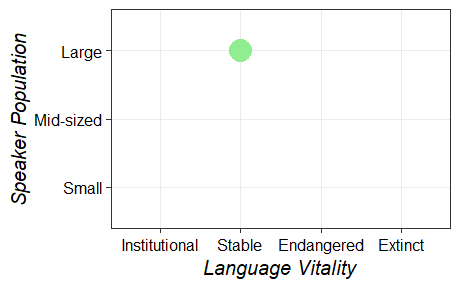 Click to enlarge with explanation
Place in Language Cloud
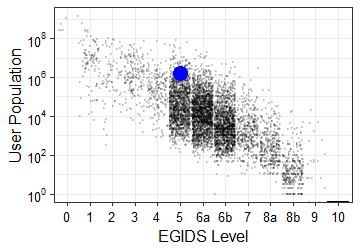 Click to enlarge with explanation