
PUM ISO 639-3
Puma
पुमा (Pumā) Autonym
A language of Nepal
- ISO 639
- pum
- Alternate Names
- Puma Kala, Puma La, Puma Pima
- Autonym
- पुमा (Pumā)
- Population
- 7,010, all users. L1 users: 6,690 (2011 census), decreasing. L2 users: 320 (2011 census).
- Location:
- Kosi province: Khotang district, Barahapokhari and Jantedhunga municipalities; Udayapur, north Chaudandigadhi municipality, along Sunkoshi river.
- Language Status
- 6b (Threatened). Language of recognized indigenous nationality: Rai.
- Classification
- Sino-Tibetan, Tibeto-Burman, Western Tibeto-Burman, Himalayan, Kiranti, Eastern
- Typology
- SOV; postpositions; noun head final; content q-word in situ; clause constituents indicated by both case-marking and word order; verbal affixation marks person and number; ergativity; tense and aspect; no passive or voice, but antipassive is a remarkable feature; nontonal.
- Language Use
- Home, religion, work; mixed use: Friends. Some young people, all adults. Positive attitudes, especially among younger generation. Also use Bantawa [bap]. Also use Chamling [rab]. Also use Nepali [npi].
- Language Development
- Literature. Periodicals. Videos. Dictionary. Texts. Agency: Kirat Puma Rai Tupkhabangkhala.
- Language Resources
- OLAC resources in and about Puma
- Writing
- Devanagari script [Deva].
- Other Comments
- Traditional religion, Christian, Hindu.
Also Spoken in
Map
Location: Kosi province: Khotang district, Barahapokhari and Jantedhunga municipalities; Udayapur, north Chaudandigadhi municipality, along Sunkoshi river.
Size and Vitality
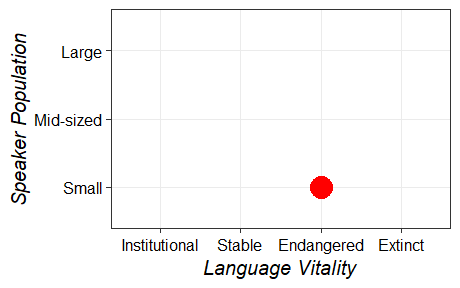 Click to enlarge with explanation
Place in Language Cloud
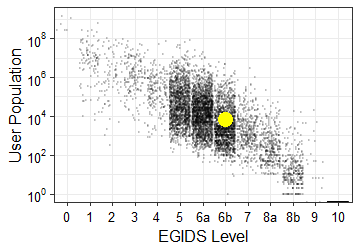 Click to enlarge with explanation