
PAR ISO 639-3
Timbisha
A language of United States
- ISO 639
- par
- Alternate Names
- Coso, Koso, Koso Shoshone, Panamint, Panamint Shoshone, Tumpisa Shoshone, Tümpisa Panamint Shoshone, Tümpisa Shoshone, Tümpisa Shoshoni
- Population
- 20 (Golla 2007). No monolinguals. Ethnic population: 100 (1998 J. McLaughlin).
- Location:
- California: Little Lake area in south Eureka Valley; Owens Lake, Coso Range, south Owens Valley area; Nevada: Amargosa Desert, Argus range, Beatty area, north and central Death Valley; Funeral Range on California-Nevada border; Grapevine mountains; Inyo mountains east slopes, northern Panamint valley and mountains; Saline valley.
- Language Status
- 8a (Moribund). Language of registered tribe: Big Pine Band Paiute Tribe of the Owens Valley, Bishop Paiute Tribe, Death Valley Timbi-Sha Shoshone Tribe, Fort Independence Indian Community of Paiute Indians of the Fort Independence Reservation, Lone Pine Paiute-Shoshone Tribe.
- Classification
- Uto-Aztecan, Northern Uto-Aztecan, Numic, Central
- Dialects
- None known. Reportedly similar to Shoshoni [shh] and Comanche [com] but not inherently intelligible with them.
- Language Use
- Only used among the oldest with each other. They lament the shift to English [eng] by youth. Younger speakers attempting to revive interest in Timbisha among the younger generations, but with little success (Golla 2007). Older adults only. Most shifted to English [eng].
- Language Development
- Literacy rate in L2: 90%. Dictionary. Grammar.
Also Spoken in
Map
Location: California: Little Lake area in south Eureka Valley; Owens Lake, Coso Range, south Owens Valley area; Nevada: Amargosa Desert, Argus range, Beatty area, north and central Death Valley; Funeral Range on California-Nevada border; Grapevine mountains; Inyo mountains east slopes, northern Panamint valley and mountains; Saline valley.
Size and Vitality
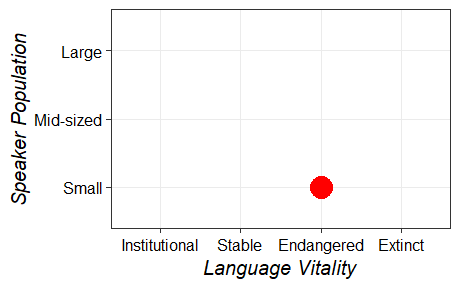 Click to enlarge with explanation
Place in Language Cloud
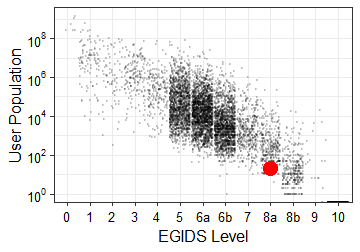 Click to enlarge with explanation