
NZS ISO 639-3
New Zealand Sign Language
A language of New Zealand
- ISO 639
- nzs
- Alternate Names
- NZSL
- Population
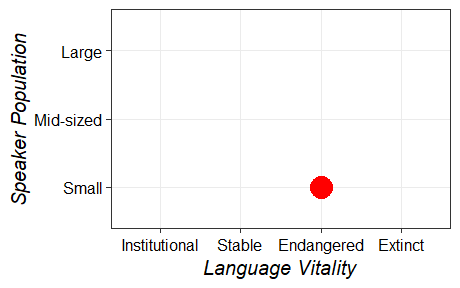
- 3,250 (McKee and Manning 2019), decreasing. Estimated 2,500–4,000 deaf signers, less than 0.1% of total population. Other estimates: 20,200 (McKee and Manning 2015). Marked decline across all age groups since 2001 (McKee and Manning 2015, McKee and McKee 2016).
- Location:
- Scattered.
- Language Status
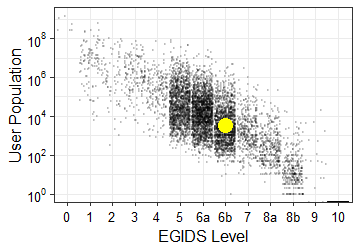
- 6b (Threatened). Recognized language (2006, New Zealand Sign Language Act, No. 18, Article 6).
- Classification
- Sign language, Deaf community sign language
- Dialects
- None known. Many structural and lexical similarities between British Sign Language (BSL) [bfi], Australian Sign Language (Auslan) [asf], and New Zealand Sign Language (NZSL) [nzs] and a high degree of mutual intelligibility (2003 T. Johnston, McKee and Kennedy 2000). Linguists sometimes use the name BANZSL to refer to them as a group, while still recognizing them as separate related languages.
- Typology
- Two-handed finger-spelling system derived from British Sign Language [bfi].
- Language Use
- All domains. Some young people, all adults. All ages, but decreasing especially in younger age groups (McKee and McKee 2016). Some also use English [eng].
- Language Development
- Dictionary. Grammar.
- Other Comments
- Developed informally in deaf schools and organizations. First school for the deaf established 1880, with oralist policies until 1979. Curriculum for using NZSL in schools has been developed but not yet implemented. Pilot project for teaching NZSL to families of young deaf children (McKee and Manning 2015). Taught in two universities. Professional training and organizations for interpreters and Deaf tutors.
Also Spoken in
Map
Location: Scattered.
Size and Vitality
 Click to enlarge with explanation
Place in Language Cloud
 Click to enlarge with explanation