
NOP ISO 639-3
Numanggang
Numaŋgaŋ Autonym
A language of Papua New Guinea
- ISO 639
- nop
- Alternate Names
- Boana, Kai, Manggang, Ngain, Numangan, Numangang, Sugu
- Autonym
- Numaŋgaŋ
- Population
- 2,500 (Hynum 2010). Few monolinguals. Ethnic population: 2,500 (Hynum 2010).
- Location:
- Morobe province: Lae district, north of Nadzab. 10 villages; Lae, Mount Hagen, and Rabaul.
- Language Status
- 5 (Developing).
- Classification
- Trans-New Guinea, Finisterre-Huon, Finisterre, Erap
- Dialects
- East Numanggang, West Numanggang.
- Typology
- SOV.
- Language Use
- Vigorous. Tok Pisin [tpi] used more in towns. All domains. Used by all. Positive attitudes. Some also use Kâte [kmg], especially the older generation. Some also use Tok Pisin [tpi], especially youth. A few also use English [eng]. Also use Nabak [naf]. Also use Nakame [nib].
- Language Development
- Literacy rate in L1: 35%–50%. Literacy rate in L2: 35%–50% in Tok Pisin [tpi] or Kâte [kmg]. Taught in primary schools. Literature. NT: 2006.
- Language Resources
- OLAC resources in and about Numanggang
- Writing
- Latin script [Latn].
- Other Comments
- Used in village court and believed to have significant influence on proceedings. Tok Pisin [tpi] or other trade language used for insults, at which point an elder will insist that discussion be limited to Numanggang due to its calming and peaceful power. Christian.
Also Spoken in
Map
Location: Morobe province: Lae district, north of Nadzab. 10 villages; Lae, Mount Hagen, and Rabaul.
Size and Vitality
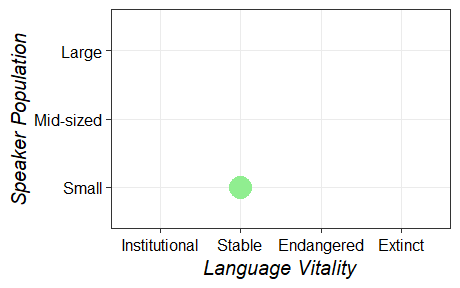 Click to enlarge with explanation
Place in Language Cloud
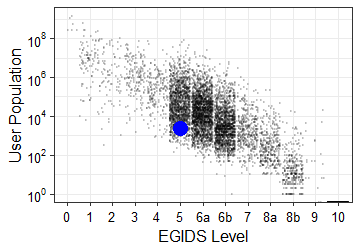 Click to enlarge with explanation