
MYU ISO 639-3
Mundurukú
Mõnjoroko Autonym
A language of Brazil
- ISO 639
- myu
- Alternate Names
- Caras-Pretas, Monjoroku, Mundurucu, Paiquize, Pari, Weidyenye
- Autonym
- Mõnjoroko
- Population
- 8,000 (Crevels 2012). Ethnic population: 10,100 (2002 FUNASA).
- Location:
- Amazonas, Mato Grosso, and Pará states; middle Madeira, and middle and upper Tapajós rivers; 22 villages.
- Language Status
- 6b (Threatened).
- Classification
- Tupian, Mundurukú
- Typology
- SOV; 17 consonants and 20 vowels, contrasting in nasality and creaky voice.
- Language Use
- Children shifting to Portuguese [por] in some communities (Mangue, Praia do Índio, Terra Indígena Coatá-Laranjal, Amazonas). Sai Cinza village and others villages on the Cururu river mostly monolingual in Mundurukú (2020 F. Gerardi). Some young people, all adults. Many also use Portuguese [por], especially those in Jacareacanga (with high proficiency), men (more than women) in Sai Cinza, those at the Roman Catholic mission on the Cururu, and men in villages along the Cururu (for trade). Many women know daily greetings. Used as L2 by Apiaká [api], Apinayé [apn].
- Language Development
- Grammar. NT: 1980.
- Language Resources
- OLAC resources in and about Mundurukú
- Writing
- Latin script [Latn].
- Other Comments
- Population formerly decimated by outsiders’ diseases and malaria is presently growing. Traditional religion, Christian.
Also Spoken in
Map
Location: Amazonas, Mato Grosso, and Pará states; middle Madeira, and middle and upper Tapajós rivers; 22 villages.
Size and Vitality
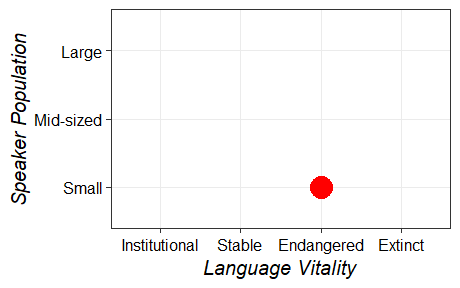 Click to enlarge with explanation
Place in Language Cloud
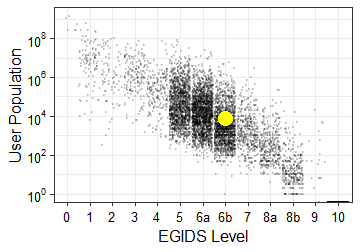 Click to enlarge with explanation