
MLM ISO 639-3
Mulam
A language of China
- ISO 639
- mlm
- Alternate Names
- Abo, Kyam, Molao, Mulao, Mulao Miao, Muliao, Mulou
- Population
- 86,000 (2005 GXLOUS). Fewer than 10,000 monolinguals (including women and preschool children). Ethnic population: 216,000 (2010 census).
- Location:
- Guangxi Zhuang Autonomous Region: Hechi prefecture, Luocheng Mulao autonomous county (90% in Dongmen and Siba communes); Yizhou county.
- Language Status
- 6b (Threatened). Language of recognized nationality: Mulao.
- Classification
- Kra-Dai, Kam-Tai, Kam-Sui
- Dialects
- None known. Lexical similarity: 65% with Dong (probably Southern Dong [kmc]).
- Typology
- SVO; reduplication; aspirated, palatalized, labialized, voiceless nasal, lateral onsets; nasal and stop finals; many Chinese loans; 6 tone categories in unchecked syllables, 2 in checked (split into 4 according to vowel length).
- Language Use
- Vigorous. Most domains, Daoist and Buddhist services. 87% speak Mulam at home; 57% speak it outside the home. 82% speak Mulam to their children. (2005 GXLOUS). Some of all ages. Positive attitudes. Also use Mandarin Chinese [cmn], commonly in writing.
- Language Development
- Literacy rate in L2: 94% (2000 census, Mulao nationality). Taught in primary schools. Radio.
- Language Resources
- OLAC resources in and about Mulam
- Writing
- Unwritten [Qaax].
- Other Comments
- They live near the Han, Dong [doc], Hmong Njua [hnj], and Iu Mien [ium]. They call themselves Mulam. Some around Luocheng call themselves Kyam. Different from the nearly extinct Western Kra Tai-Kadai language also called Mulao [giu], previously spoken by Gelao nationality people in Guizhou. Traditional religion, Buddhist, Daoist.
Also Spoken in
Map
Location: Guangxi Zhuang Autonomous Region: Hechi prefecture, Luocheng Mulao autonomous county (90% in Dongmen and Siba communes); Yizhou county.
Size and Vitality
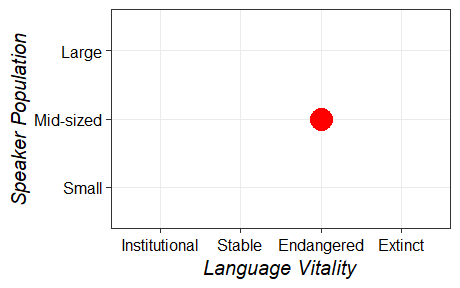 Click to enlarge with explanation
Place in Language Cloud
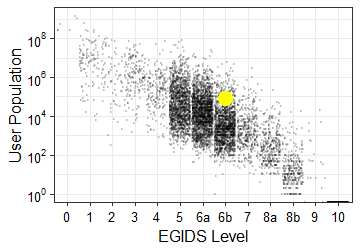 Click to enlarge with explanation