
MID ISO 639-3
Mandaic
A language of Iran
- ISO 639
- mid
- Alternate Names
- Mandāyì, Mandɔyí, Mandaayi, Mandaean, Mandi, Mandini, Modern Mandaic, Neo-Mandaic, Raṭnā, Sabe’in, Sabean, Subbi
- Population
- 100 in Iran (2017). Ethnic population: 23,000.
- Location:
- Khuzestan province: Hoveiseh, other towns.
- Language Status
- 8a (Moribund).
- Classification
- Afro-Asiatic, Semitic, Central, Aramaic, Eastern, Mandaic
- Dialects
- Ahwaz (Ahvaz), Shushtar (Shustar), Khorramshahr. Iraqi Neo-Mandaic became extinct during the 20th century. Shushtar dialect may have no remaining speakers. The Khorramshahr and Ahwaz dialects are mutually intelligible.
- Typology
- SVO; 2 genders (masculine, feminine); 3 voices (active, middle, passive); 2 aspects (perfective, imperfective); 28 consonants, 6 vowels and 5 diphthongs; triliteral roots.
- Language Use
- Ethnic group of 5,000 in Khuzestan, Iran, speak Iranian Persian [pes] (1994 H. Mutzafi). Older adults only. Positive attitudes. Most shifted to Iranian Persian [pes]. Most shifted to Mesopotamian Spoken Arabic [acm].
- Language Resources
- OLAC resources in and about Mandaic
- Writing
- Mandaic script [Mand].
- Other Comments
- Mandaean.
Also Spoken in
- Location
- Scattered in Al Basrah and Baghdad governorates.
- Dialects
- Iraqi Neo-Mandaic.
- Language Status
- 9 (Dormant)
- Other Comments
- Mandaean. View other languages of Iraq
Language Name
Mandaic
User Population
No known L1 speakers in Iraq. Ethnic population: 30,000.
Map
Location: Khuzestan province: Hoveiseh, other towns.
Size and Vitality
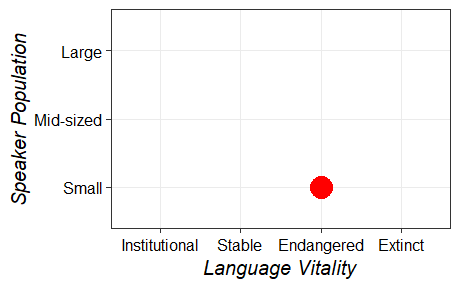 Click to enlarge with explanation
Place in Language Cloud
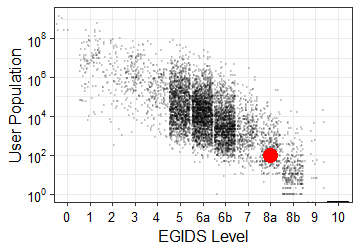 Click to enlarge with explanation