
MHX ISO 639-3
Lhao Vo
Lhaovo Autonym
A language of Myanmar
- ISO 639
- mhx
- Alternate Names
- Diso, Lang, Laungaw, Laungwaw, Lawgore, Lawng, Liangsu, Lovo, Malu, Mulu, Zi, “Maru” (pej.)
- Autonym
- Lhaovo
- Population
- 121,000 in Myanmar (Leclerc 2017d). Total users in all countries: 124,500.
- Location:
- Kachin state: Chiphwe, Sawlaw, and Waimaw townships widely dispersed in east border area; Shan state: Kutkai township north.
- Language Status
- 5 (Developing).
- Classification
- Sino-Tibetan, Tibeto-Burman, Ngwi-Burmese, Burmish, Northern
- Dialects
- Dago’ Lawng Bit, Zagaran Mran, Gawan Naw’, Hlo’lan, Laking, Wa Khawk, Lawng Hsu. Lawng Hsu may have difficult intelligibility with the other dialects.
- Typology
- SOV; tense-lax vowel distinction; loans from Jingpho [kac], Daai Chin[dao], Burmese [mya], and Chinese [cmn]; 3 tones.
- Language Use
- Vigorous. Most domains. Used by all. Positive attitudes. Also use Jingpho [kac].
- Language Development
- Literacy rate in L2: 25%–50%. Dictionary. Grammar. Bible: 2009.
- Language Resources
- OLAC resources in and about Lhao Vo
- Writing
- Latin script [Latn].
- Other Comments
- Different from Mru [mro] and Mro-Khimi [cmr] of northwest Rakhine state and Paletwa township, South Chin state. Culturally similar to Kachin. Christian.
Also Spoken in
- Location
- Yunnan province: Dehong Dai-Jingpo autonomous prefecture, Lianghe, Longchuan, Luxi, Ruili, and Yingjiang counties.
- Language Status
- 6b (Threatened)
- Other Comments
- Non-indigenous. Different from the Matu variety of Khumi Chin [cnk]. Maru speakers reportedly preserve ancient cultural characteristics more than other ethnic groups. View other languages of China
Language Name
Lhaovo
User Population
3,500 in China (2000).
Map
Location: Kachin state: Chiphwe, Sawlaw, and Waimaw townships widely dispersed in east border area; Shan state: Kutkai township north.
Size and Vitality
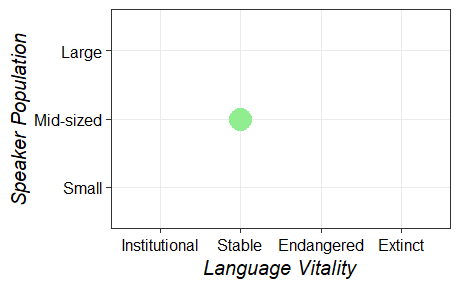 Click to enlarge with explanation
Place in Language Cloud
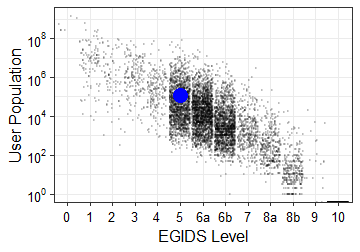 Click to enlarge with explanation