
LOY ISO 639-3
Lhowa
ल्होवा (Lhowa) Autonym
A language of Nepal
- ISO 639
- loy
- Alternate Names
- Glo Skad, Lhopa, Lo Montang, Loba, Loke, Loket, Lopa, Lowa, Loyu, Mustangi
- Autonym
- ल्होवा (Lhowa)
- Population
- 7,500 (2011). 5,000 Upper Mustang and 2,500 Baragaunle.
- Location:
- Gandaki province: Mustang district, upper Kali Gandaki river valley; Bahargaun Muktikhsetra, Dalome, and Lo Manthang municipalities.
- Language Status
- 6a (Vigorous). Language of recognized indigenous nationality: Bahragaunle, Lhopa.
- Classification
- Sino-Tibetan, Tibeto-Burman, Western Tibeto-Burman, Bodish, Central Bodish, Central, gTsang
- Dialects
- Bahragaunle (Bahragaun, “Bhoti Gurung” (pej.)), Upper Mustang (Loke). High intelligibility between dialects reported. Lexical similarity: 79%–88% between dialects, 59%–71% with Dolpo [dre], 54%–57% with Lhasa Tibetan [bod], 58%–67% with Mugom [muk].
- Typology
- SOV; postpositions; noun head initial; 5 noun classes and 3 genders; content q-word in situ; at least 2 suffixes; no passives or voice; tonal; 44 consonant and 8 vowel phonemes.
- Language Use
- Some youth totally educated outside language area and may not be able to speak Loke. Tibetan [bod] is used in religious domain. Home, friends. Used by all. Positive attitudes. Also use Central Tibetan [bod]. Also use Nepali [npi]. Used as L2 by Dolpo [dre], Seke [skj].
- Language Development
- Literacy rate in L2: 41% for whole district, includes Thakalis, Nepalis. (males 57%, females 28%). Non-formal education. Dictionary. Grammar.
- Language Resources
- OLAC resources in and about Lhowa
- Writing
- Devanagari script [Deva]. Tibetan script [Tibt].
- Other Comments
- Distinct from Lhoba in China and India, a Mirish language. Lo inhabitants are called Lopa or Lowa. Their capital is Manthang, called Mustang by outsiders. Manthang has 200 houses, many monasteries. Buddhist, traditional religion.
Also Spoken in
Map
Location: Gandaki province: Mustang district, upper Kali Gandaki river valley; Bahargaun Muktikhsetra, Dalome, and Lo Manthang municipalities.
Size and Vitality
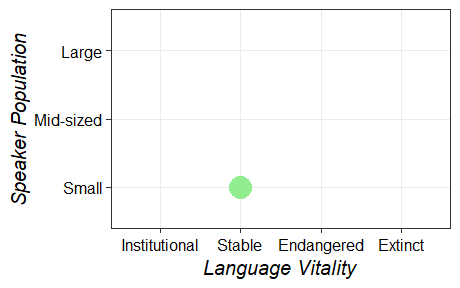 Click to enlarge with explanation
Place in Language Cloud
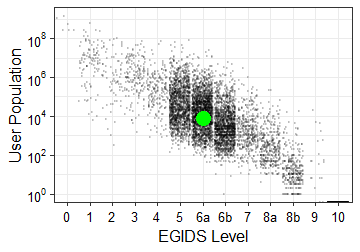 Click to enlarge with explanation