
LKE ISO 639-3
Kenye
A language of Uganda
- ISO 639
- lke
- Alternate Names
- Bakenyi, Kenyi, Lukenhe, Lukenye, Lukenyi
- Population
- 99,900 (2014 census), increasing. Census based on tribal affiliation.
- Location:
- Buyende, Kaliro, Kibuku, Mayuge, Pallisa, and Serere districts: Lake Victoria and Lake Kyoga basin; some in Bugiri, Busia, Kaberamaido, Kamuli, Kayunga, and Namayingo districts.
- Language Status
- 6a (Vigorous).
- Classification
- Niger-Congo, Atlantic-Congo, Volta-Congo, Benue-Congo, Bantoid, Southern, Narrow Bantu, Central, J, Nyoro-Ganda (E.16)
- Dialects
- Lukenye-Ludebede, Lukenye-Lukooli. Kenye, Lamogi [xog], Siginyi [xog], and Gwere [gwr] are mutually intelligible. Lexical similarity: 81% with Soga [xog], 71%–86% with Ganda [lug], 64% with Gwere [gwr], 58% with Saamia [lsm].
- Language Use
- Prefer to use surrounding languages outside the home; seldom identify themselves as BaKenye. They shy away from their true identity for fear of being marginalized and discriminated against (Abdallah 2004). Mostly home. Used by all. Mixed attitudes. Many also use English [eng]. Many also use Ganda [lug]. Many also use Gwere [gwr]. Many also use Soga [xog]. Some also use Ateso [teo]. Some also use Saamya-Gwe [lsm].
- Language Development
- Radio.
- Language Resources
- OLAC resources in and about Kenye
- Writing
- Unwritten [Qaax].
- Other Comments
- Politically distinct from Ganda [lug]. Some Kenye people claim to be a displaced people of Ganda origin.
Also Spoken in
Map
Location: Buyende, Kaliro, Kibuku, Mayuge, Pallisa, and Serere districts: Lake Victoria and Lake Kyoga basin; some in Bugiri, Busia, Kaberamaido, Kamuli, Kayunga, and Namayingo districts.
Size and Vitality
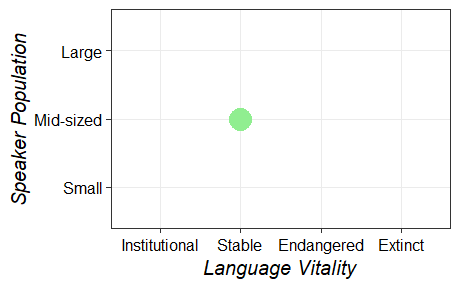 Click to enlarge with explanation
Place in Language Cloud
 Click to enlarge with explanation