
LAQ ISO 639-3
Qabiao
A language of Viet Nam
- ISO 639
- laq
- Alternate Names
- Bendi Lolo, Ka Bao, Ka Beo, Ka Biao, Laqua, Lolo, Pen Ti, Pu Péo, Pubiao, Pupeo, Qabiaw
- Population
- 900 in Viet Nam (2019 census). , based on ethnicity. Total users in all countries: 918.
- Location:
- Ha Giang province: Dunshi, Pugao, Pula, Pubang, and Manong; Yên Minh and Mèo Vac districts; Dông Van district, Phô Là and Sung Chang villages.
- Language Status
- 6b (Threatened). Language of recognized ethnic group: Pu Peo.
- Classification
- Kra-Dai, Kra, Eastern Kra
- Dialects
- None known. Lexical similarity: 38% with Gelao, 33% with Lachi [lbt], 30% with Northern Zhuang, 29% with Dong, 26% with Hlai [lic], 10% with Hmong, 7% with Iu Mien [ium].
- Language Use
- Some young people, all adults. Many also use Mandarin Chinese [cmn] (Asian Minorities Outreach 1999a). Some also use Nung [nut] (Asian Minorities Outreach 1999a).
- Language Resources
- OLAC resources in and about Qabiao
- Writing
- Latin script [Latn], no longer in use.
- Other Comments
- Traditional religion.
Also Spoken in
- Location
- Yunnan province: Malipo county, Wenshan Zhuang and Miao autonomous prefectures, Donggan township, Makun, Matong, Pucha, and Punong on Viet Nam border; Babu district, Longlong; Liuhe district, Meitang and Xinfa; Longlin; Tiechang district, Pufeng.
- Language Status
- 8b (Nearly extinct)
- Other Comments
- Intermarriage with Han, Zhuang, Miao and Dai nationality peoples is common. View other languages of China
Language Name
Qabiao
User Population
18 in China (2002 Li Yunbing), decreasing. A few fluent elderly speakers in 2001 (Li 2006). Ethnic population: 400 (Li 2006).
Map
Location: Ha Giang province: Dunshi, Pugao, Pula, Pubang, and Manong; Yên Minh and Mèo Vac districts; Dông Van district, Phô Là and Sung Chang villages.
Size and Vitality
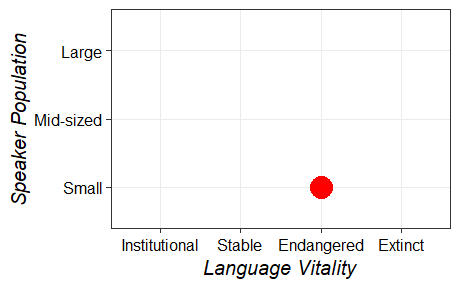 Click to enlarge with explanation
Place in Language Cloud
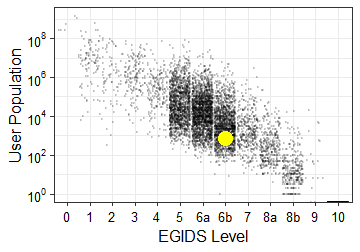 Click to enlarge with explanation