
KMK ISO 639-3
Kalinga, Limos
Linimos Autonym
A language of Philippines
- ISO 639
- kmk
- Alternate Names
- Limos-Liwan Kalinga, Northern Kalinga
- Autonym
- Linimos
- Population
- 12,700 (2007 census), increasing. 113,000 all Kalinga (2005 UNSD).
- Location:
- Cordillera Administrative Region: Apayao province, Conner municipality; Kalinga province, Tabuk city, north to border.
- Language Status
- 4 (Educational).
- Classification
- Austronesian, Malayo-Polynesian, Northern Luzon, Meso-Cordilleran, South-Central Cordilleran, Central Cordilleran, North Central Cordilleran, Kalinga-Itneg, Kalinga
- Dialects
- None known. Intelligibility: Lubuagan Kalinga [knb] 65%, Southern Kalinga [ksc] 66%, Tanudan Kalinga 67% [kml], Ilocano [ilo] 84%.
- Typology
- VOS; prepositions; genitives before noun heads; articles, adjectives and numerals before noun heads; relatives after noun heads; question word in sentence-initial position; 3 maximum prefixes, 2 maximum suffixes; word order does not distinguish subjects, objects and indirect objects; word order does not distinguish given and new information, topic and comment; affixes do not indicate case of noun phrases; verb affixes mark number; passives; causatives; comparatives; CV, CVC.
- Language Use
- All domains. Used by all. Positive attitudes. Also use English [eng]. Also use Ilocano [ilo]. Also use Tagalog [tgl]. Used as L2 by Mabaka Valley Kalinga [kkg].
- Language Development
- Literacy rate in L1: 70%. Literacy rate in L2: 80%. Taught in secondary schools. Literature. Radio. Videos. NT: 2004.
- Language Resources
- OLAC resources in and about Kalinga, Limos
- Writing
- Latin script [Latn], used since 1976.
- Other Comments
- Lowland teachers and church leaders use other languages which Limos Kalinga speakers find difficult to understand, and it forces the Limos Kalinga speakers to shift to the other languages. Christian.
Also Spoken in
Map
Location: Cordillera Administrative Region: Apayao province, Conner municipality; Kalinga province, Tabuk city, north to border.
Size and Vitality
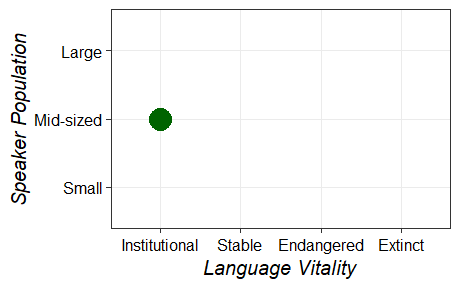 Click to enlarge with explanation
Place in Language Cloud
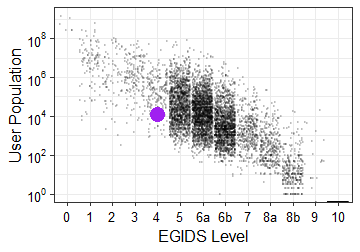 Click to enlarge with explanation