
KMB ISO 639-3
Kimbundu
Kimbundu Autonym
A language of Angola
- ISO 639
- kmb
- Alternate Names
- Kimbundo, Loanda Mbundu, Loande, Luanda, Lunda, Mbundu, N’bundo, Nbundu, North Mbundu
- Autonym
- Kimbundu
- Population
- 1,700,000 in Angola (2015 L. Jordan). Ethnic population: 6,000,000 (2015 L. Jordan). Total users in all countries: 1,700,160.
- Location:
- Widespread northwest, mainly Bengo, Kuanza Norte, and Malanje provinces; adjacent areas in Kuanza Sul, Luanda, and Uíge provinces.
- Language Status
- 3 (Wider communication). Established 15th century. Spread in northwestern Angola under Portuguese colonialism (16th century) and Methodist missionary influence (1880’s).
- Classification
- Niger-Congo, Atlantic-Congo, Volta-Congo, Benue-Congo, Bantoid, Southern, Narrow Bantu, Central, H, Kimbundu (H.21)
- Dialects
- Njinga (Ginga, Jinga), Mbamba (Bambeiro, Kimbamba), Mbaka (Ambaquista), Ngola, Ndongo (Dongo, Kindongo). Mbamba dialect may be a separate language.
- Language Use
- Most also use Kibala [blv]. Used as L2 by Kibala [blv].
- Language Development
- Dictionary. Grammar. Bible: 1980.
- Language Resources
- OLAC resources in and about Kimbundu
- Writing
- Latin script [Latn].
Also Spoken in
- Location
- São Tomé province: Água Grande (town of Bairro da Liberdade), Lobata (town of Agostinho Neto), and Mé Zóxi (town of Monte Café) districts.
- Dialects
- None known. Two variants are recognized by speakers: Kimbundu and Mbundu. Kimbundu variant spoken in Monte Café, and Mbundu variant spoken in Agostinho Neto and Bairro da Liberdade. Only partially mutually intelligible (2019 D. Eberhard).
- Language Status
- 8a (Moribund)
- Other Comments
- Non-indigenous. Spoken by descendants of indentured servants from Angola. Some pejorative attitudes within broader society (2019 D. Eberhard). View other languages of São Tomé e Príncipe
Language Name
Kimbundu
User Population
160 in São Tomé e Príncipe (2019 D. Eberhard). Ethnic population: 3,000 (2019 D. Eberhard).
Map
Location: Widespread northwest, mainly Bengo, Kuanza Norte, and Malanje provinces; adjacent areas in Kuanza Sul, Luanda, and Uíge provinces.
Size and Vitality
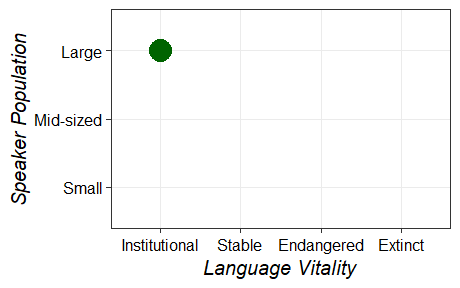 Click to enlarge with explanation
Place in Language Cloud
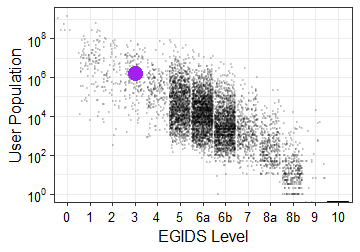 Click to enlarge with explanation