
KEN ISO 639-3
Kenyang
Kɛnyaŋ Autonym
A language of Cameroon
- ISO 639
- ken
- Alternate Names
- Banjangi, Banyang, Banyangi, Bayangi, Manyang, “Nyang” (pej.)
- Autonym
- Kɛnyaŋ
- Population
- 65,000 (1992 SIL), increasing. Ethnic population: 65,000.
- Location:
- South West region: Koupé-Muanengouba division, west corner of Nguti subdivision; Manyu division, Mamfe Central and Upper Banyang subdivisions, Mamfe area and southwest.
- Language Status
- 5 (Developing).
- Classification
- Niger-Congo, Atlantic-Congo, Volta-Congo, Benue-Congo, Bantoid, Southern, Mamfe
- Dialects
- Upper Kenyang (Haut-Kenyang), Lower Kenyang (Bas-Kenyang), Bakoni (Kicwe, Kitwii, Manyeman, Manyemen, Northern Balong, Twii, Upper Balong).
- Typology
- SVO; prepositions; genitives, articles, adjectives, numerals, relatives after noun heads; question word final; maximum prefixes 3.
- Language Use
- All domains. Used by all. Positive attitudes. All also use Cameroon Pidgin [wes]. Most also use English [eng]. Some also use Denya [anv]. Some also use Ejagham [etu]. A few also use French [fra]. Used as L2 by Akoose [bss], Denya [anv], Ejagham [etu], Kendem [kvm].
- Language Development
- Literacy rate in L1: 10%. Literacy rate in L2: 30% (gov’t figure). Used informally in education. Literature. Radio. NT: 2010.
- Language Resources
- OLAC resources in and about Kenyang
- Writing
- Latin script [Latn].
- Other Comments
- Upper Balong is distinct from Bafaw-Balong [bwt]. Christian, Muslim, traditional religion.
Also Spoken in
Map
Location: South West region: Koupé-Muanengouba division, west corner of Nguti subdivision; Manyu division, Mamfe Central and Upper Banyang subdivisions, Mamfe area and southwest.
Size and Vitality
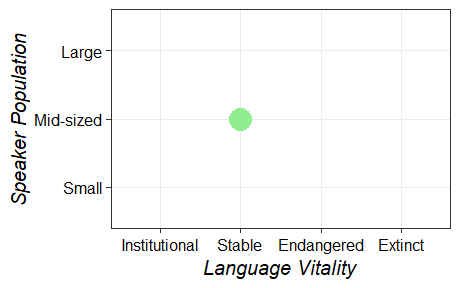 Click to enlarge with explanation
Place in Language Cloud
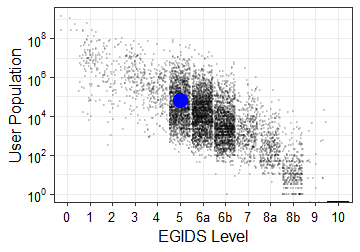 Click to enlarge with explanation