
KEA ISO 639-3
Kabuverdianu
Kabuverdianu, Kriol Autonym
A language of Cape Verde Islands
- ISO 639
- kea
- Alternate Names
- Caboverdiano, Cape Verdean Creole, Criol, Crioulo, Krioulu
- Autonym
- Kabuverdianu, Kriol
- Population
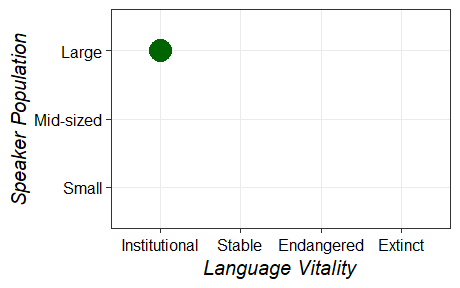
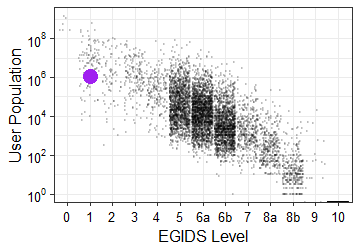
- 492,000 in Cape Verde Islands, all users. L1 users: 478,000 in Cape Verde Islands (2010 census), increasing. L2 users: 14,000 (2010 census). 74,000 monolinguals (2010 census). Ethnic population: 1,000,000 (2010 Gabinete de Migração Cabo-verdiana). Total users in all countries: 1,194,800 (as L1: 1,180,800; as L2: 14,000).
- Location:
- Widespread.
- Language Status
- 1 (National). Statutory national language (2010, Constitution, Article 9(2-3)).
- Classification
- Creole, Portuguese based
- Dialects
- Kabuverdianu di Santiagu (“Badiu” (pej.), Caboverdiano de Santiago, Kriol di Santiagu), Kabuverdianu di Brava (Caboverdiano de Brava, Kriol di Brava), Kabuverdianu di Fogu (Caboverdiano de Fogo, Kriol di Fogu), Kabuverdianu di Sonsente (Caboverdiano de São Vicente, Kriol di Sonsente, “Sanpadjudu” (pej.)), Kabuverdianu di Maiu (Caboverdiano de Maio, Kriol di Maiu), Kabuverdianu di Sintanton (Caboverdiano de Santo Antão, Kriol di Sintanton), Kabuverdianu di Son Nikulau (Caboverdiano de São Nicolau, Kriol di Son Nikulau), Kabuverdianu di Sal (Caboverdiano de Sal, Kriol di Sal), Kabuverdianu di Buvista (Caboverdiano de Boa Vista, Kriol di Buvista).
- Language Use
- Vigorous. All domains. Used by all. Positive attitudes. Most also use Portuguese [por], which is learned in school. Kabuverdianu [kea] coexists in constant contact with Portuguese [por], so decreolization is a concern that government academics and educators are constantly addressing in their Kabuverdianu development efforts (Veiga 1995).
- Language Development
- Literacy rate in L2: 83%. Cape Verdeans who can read Portuguese [por] are able to read Kabuverdianu, with a little effort to adjust to a few differences between the Portuguese orthography and the official Kabuverdianu orthography. Taught in primary schools. Taught in secondary schools. Teachers often resort to using Kabuverdianu in order to clearly communicate their material. Kabuverdianu language and culture is a required subject at the university level, and those training to be school teachers take additional courses on teaching the structure of Kabuverdianu. Literature. Newspapers. Periodicals. Radio. TV. Videos. Dictionary. Grammar. Texts. Bible portions: 2004–2013.
- Language Resources
- OLAC resources in and about Kabuverdianu
- Writing
- Latin script [Latn].
- Other Comments
- Christian.
Also Spoken in
- Language Status
- Unestablished
- Other Comments
- Non-indigenous. View other languages of Angola
Language Name
Kabuverdianu
User Population
65,000 in Angola (2015 Instituto de Apoio ao Emigrante).
- Language Status
- Unestablished
- Other Comments
- Non-indigenous. View other languages of Argentina
Language Name
Kabuverdianu
User Population
14,000 in Argentina (2015 Instituto de Apoio ao Emigrante).
- Language Status
- Unestablished
- Other Comments
- Non-indigenous. View other languages of Brazil
Language Name
Kabuverdianu
User Population
4,000 in Brazil (2015 Instituto de Apoio ao Emigrante).
- Language Status
- Unestablished
- Other Comments
- Non-indigenous. View other languages of Canada
Language Name
Kabuverdianu
User Population
4,000 in Canada (2015 Instituto de Apoio ao Emigrante).
- Language Status
- Unestablished
- Other Comments
- Non-indigenous. View other languages of Switzerland
Language Name
Kabuverdianu
User Population
2,100 in Switzerland (2015 Instituto de Apoio ao Emigrante).
- Language Status
- Unestablished
- Other Comments
- Non-indigenous. View other languages of Germany
Language Name
Kabuverdianu
User Population
3,000 in Germany (2015 Instituto de Apoio ao Emigrante).
- Language Status
- Unestablished
- Other Comments
- Non-indigenous. View other languages of Spain
Language Name
Kabuverdianu
User Population
3,100 in Spain (2015 Instituto de Apoio ao Emigrante).
- Language Status
- Unestablished
- Other Comments
- Non-indigenous. View other languages of France
Language Name
Kabuverdianu
User Population
26,000 in France (2015 Instituto de Apoio ao Emigrante).
- Language Status
- Unestablished
- Other Comments
- Non-indigenous. View other languages of Gabon
Language Name
Kabuverdianu
User Population
3,000 in Gabon (2015 Instituto de Apoio ao Emigrante).
- Language Status
- Unestablished
- Other Comments
- Non-indigenous. View other languages of Guinea-Bissau
Language Name
Kabuverdianu
User Population
2,300 in Guinea-Bissau (2015 Instituto de Apoio ao Emigrante).
- Language Status
- Unestablished
- Other Comments
- Non-indigenous. View other languages of Italy
Language Name
Kabuverdianu
User Population
4,100 in Italy (2015 Instituto de Apoio ao Emigrante).
- Language Status
- Unestablished
- Other Comments
- Non-indigenous. View other languages of Luxembourg
Language Name
Kabuverdianu
User Population
3,300 in Luxembourg (2015 Instituto de Apoio ao Emigrante).
- Language Status
- Unestablished
- Other Comments
- Non-indigenous. View other languages of Mozambique
Language Name
Kabuverdianu
User Population
2,000 in Mozambique (2017).
- Language Status
- Unestablished
- Other Comments
- Non-indigenous. View other languages of Netherlands
Language Name
Kabuverdianu
User Population
20,800 in Netherlands (2019).
- Location
- Primarily in the neighborhoods on the outskirts of Lisbon.
- Language Status
- 5 (Dispersed)
- Other Comments
- Non-indigenous. Kabuverdianu is the second most commonly spoken language in Portugal. View other languages of Portugal
Language Name
Kabuverdianu
User Population
63,900 in Portugal (2007 J. Leclerc), increasing.
- Language Status
- Unestablished
- Other Comments
- Non-indigenous. View other languages of Senegal
Language Name
Kabuverdianu
User Population
39,000 in Senegal (2015 Instituto de Apoio ao Emigrante).
- Location
- Highest concentration in Príncipe province. Others scattered throughout São Tomé province.
- Language Status
- 6b (Threatened)
- Other Comments
- Non-indigenous. Descendants of Cape Verdeans were imported by the Portuguese as indentured laborers in the 1800s to work on the plantations, following the freeing of the slaves in São Tomé e Príncipe (2018 Instituto de Apoio ao Emigrante). View other languages of São Tomé e Príncipe
Language Name
Kabuverdianu
User Population
17,500 in São Tomé e Príncipe (2019 D. Eberhard). Based on 2012 census with extrapolations for 2019. Ethnic population: Estimates of ethnic population unreliable due to high rate of mixed marriages and increased awareness of national identity (2020 M. Bouchard).
- Location
- Massachusetts, Rhode Island.
- Dialects
- Kabuverdianu Sotavento.
- Language Status
- 5 (Dispersed)
- Other Comments
- Non-indigenous. Descendants of Cape Verdeans taken to New England in the 1800s to work in the whaling industry, plus subsequent chain migration of family members. View other languages of United States
Language Name
Kabuverdianu
User Population
425,000 in United States (2010 Instituto de Apoio ao Emigrante).
Map
Location: Widespread.
Size and Vitality
 Click to enlarge with explanation
Place in Language Cloud
 Click to enlarge with explanation