
KAK ISO 639-3
Kalanguya
Kalanguya Autonym
A language of Philippines
- ISO 639
- kak
- Alternate Names
- Ahin-Kayapa Kalanguya, Ikalahan, Kalangoya, Kalangoya-Ikalahan, Kayapa Kallahan
- Autonym
- Kalanguya
- Population
- 100,000 (2010), increasing. census.
- Location:
- Cagayan Valley region: Benguet province, Bokod municipality; western Nueva Vizcaya province; Cordillera Administrative Region: Ifugao province, Hungduan municipality; Ilocos region: northeast Pangasinan province, San Nicolas municipality.
- Language Status
- 5 (Developing).
- Classification
- Austronesian, Malayo-Polynesian, Northern Luzon, Meso-Cordilleran, South-Central Cordilleran, Southern Cordilleran, West Southern Cordilleran, Nuclear Southern Cordilleran, Kallahan
- Dialects
- Central Kalanguya (Kayapa), Northern Kalanguya (Ambaguio, Tinoc), Southern Kalanguya (Santa Fe), Western Kalanguya (Benguet).
- Language Use
- Vigorous. Home, church, community affairs. Used by all. Positive attitudes. All also use Ilocano [ilo]. All also use Tagalog [tgl]. Used as L2 by Karao [kyj].
- Language Development
- Literacy rate in L2: 85%. Mother-tongue multilingual education has been implemented in primary schools. Taught in primary schools. Literature. Radio. Videos. Grammar. Texts. Bible: 2020.
- Language Resources
- OLAC resources in and about Kalanguya
- Writing
- Latin script [Latn].
- Other Comments
- Intermarriage with Ilocanos and other groups. Children in such marriages tend to adapt a somewhat different language which is a combination of their parents’ languages. Christian, traditional religion.
Also Spoken in
Map
Location: Cagayan Valley region: Benguet province, Bokod municipality; western Nueva Vizcaya province; Cordillera Administrative Region: Ifugao province, Hungduan municipality; Ilocos region: northeast Pangasinan province, San Nicolas municipality.
Size and Vitality
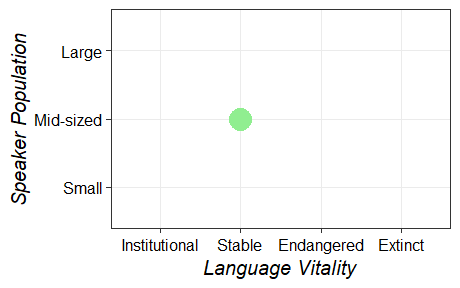 Click to enlarge with explanation
Place in Language Cloud
 Click to enlarge with explanation