
JUP ISO 639-3
Hupdë
Hup Autonym
A language of Brazil
- ISO 639
- jup
- Alternate Names
- Hupda, Hupdah, Hupdé, Jupde, Ubdé, “Hupdá Makú” (pej.), “Jupdá Macú” (pej.), “Macú de Tucano” (pej.), “Makú-Hupdá” (pej.)
- Autonym
- Hup
- Population
- 1,500 in Brazil (Crevels 2012). Ethnic population: 1,500 (Crevels 2012). Total users in all countries: 1,740.
- Location:
- Amazonas state: Rio Auari.
- Language Status
- 5* (Developing).
- Classification
- Puinavean, Hupda
- Dialects
- Hupdë, Tuhup, Nëhup. Ruhlen and others classify it as Puinave, Macro-Tucanoan. Intelligible with Yahup [yab].
- Typology
- SOV; agglutinative; case-marking; word-accent; 19 consonants and 15 vowels, including 5 nasal vowels.
- Language Use
- Vigorous. Some also use Portuguese [por], but only less than 20% of men. Also use Tucano [tuo], especially men (almost all) and some women.
- Language Development
- Children do not attend school. Where informal schooling is available Hupdë is used as the language of instruction. Dictionary. Grammar.
- Language Resources
- OLAC resources in and about Hupdë
- Writing
- Latin script [Latn], in development.
- Other Comments
- Subservient to the Tucano and other Tucanoan Indians. Some nomadic between Brazil and Colombia.
Also Spoken in
- Location
- Vaupés department: Papurí and Tiquié river systems.
- Language Status
- 6a (Vigorous)
- Other Comments
- Subservient to Tucanoan Indians. Some nomadic between Colombia and Brazil. View other languages of Colombia
Language Name
Hupdë
User Population
240 in Colombia (Crevels 2007). Ethnic population: 240 (Crevels 2007).
Map
Location: Amazonas state: Rio Auari.
Size and Vitality
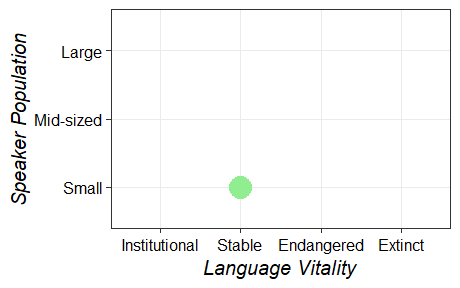 Click to enlarge with explanation
Place in Language Cloud
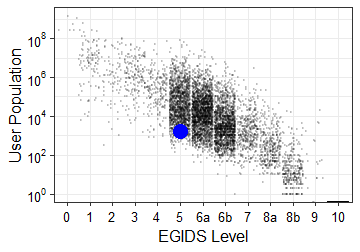 Click to enlarge with explanation