
IUM ISO 639-3
Iu Mien
Iu Mienh Autonym
A language of China
- ISO 639
- ium
- Alternate Names
- Ban Yao, Highland Yao, Man, Mian, Mien, Mienh, Mjen, Myen, Pan Yao, Yao, Yao Mienh, Yiu Mien, Youmian
- Autonym
- Iu Mienh
- Population
- 383,000 in China (Wang and Mao 1995). Ethnic population: 2,800,000 (2010 census). Includes Biao Mon [bmt], Biao-Jiao Mien [bje], Bu-Nao Bunu [bwx], Jiongnai Bunu [pnu], Wunai Bunu [bwn], Younuo Bunu [buh], Dzao Min [bpn], Kim Mun [mji], Lakkia [lbc], Pa-Hng [pha], and Yerong [yrn] languages. Total users in all countries: 837,400.
- Location:
- Guangdong province: Ruyuan county; Guangxi Zhuang Autonomous Region, Dayao mountains; Guizhou province: Congjiang, Libo, and Rongjiang counties; Hunan, Jiangxi, and Yunnan provinces.
- Language Status
- 5 (Developing). Language of recognized nationality: Yao.
- Classification
- Hmong-Mien, Mienic, Mian-Jin
- Dialects
- Guoshan Yao. Dialects may not be intelligible. Biao Mon [bmt] may be a dialect of Iu Mien. Differences from other Mienic languages are in the tone system, consonants, vowel quality, vowel length. Chinese linguists consider the Iu Mien spoken in Changdong, Jinxiu Yao Autonomous County, Guangxi to be the standard. May be most similar to Mandarin Chinese [cmn]. Lexical similarity: 78% with Kim Mun [mji], 70% with Biao-Jiao Mien [bje], 61% with Dzao Min [bpn].
- Typology
- Tonal, 7 tones.
- Language Use
- Vigorous. All domains. Used by all. Positive attitudes. Also use Chinese [zho], especially adults. Used as L2 by Chadong [cdy], Hlai [lic], Jiongnai Bunu [pnu], Lakkia [lbc].
- Language Development
- Radio. Dictionary. Grammar. Texts. Bible: 2008.
- Language Resources
- OLAC resources in and about Iu Mien
- Writing
- Han (Hanzi, Kanji, Hanja) script [Hani], dating from before Yuan dynasty, used in folk domains and text messaging. Lao script [Laoo], used in Laos. Latin script [Latn], used at least since 1930s, used in China, Thailand, United States, France, Canada. Thai script [Thai], used in Thailand.
- Other Comments
- Ethnic groups: Hua Lan, Hua, Hung, Cao Long, Coc, Khoc, Quan Coc, Quan Trang, Son Trang, Sung, Tien (Tiao Tchaine), Yaya. The Lakkia, Mun, Bunu languages, plus speakers of other Mienic and Hmongic languages, and ethnic Yao who speak Chinese, are officially classified within Yao nationality in China. Pingdi Yao (Piongtuojo, Piongtoajeu) is a variety of Chinese with 1,000,000 speakers, half of whom are members of Yao nationality, Guangdong Province, Hunan-Guangxi border. Daoist, traditional religion.
Also Spoken in
- Language Status
- Unestablished
- Other Comments
- Non-indigenous. View other languages of Denmark
Language Name
Iu Mien
User Population
8,000 in Denmark (2007).
- Location
- Bokeo province: Houay Xay and Pak Tha districts; Luang Namtha province: Long, Namtha, and Sing districts; Phongsali province: Yot Ou district; Xiangnabouli province: Khop and Xienghone districts.
- Language Status
- 5 (Developing)
- Other Comments
- Almost all Western refugees came from Laos. Daoist, traditional religion. View other languages of Laos
Language Name
Iu Mien
User Population
32,400 in Laos (2015 census). , based on ethnicity.
- Location
- Chiang Rai, Phayao, Lampang, Kamphaeng Phet, and Nan provinces; possibly in Chiang Mai and Sukhothai provinces. 159 villages.
- Dialects
- Chiangrai.
- Language Status
- 5 (Developing)
- Other Comments
- Non-indigenous. All Yao and Mien in Thailand are Iu Mien. Daoist, traditional religion. View other languages of Thailand
Language Name
Iu Mien
User Population
45,000 in Thailand (Leclerc 2019a). , based on ethnicity.
- Language Status
- Unestablished
- Other Comments
- Non-indigenous. View other languages of United States
Language Name
Iu Mien
User Population
19,000 in United States (2015 census).
- Location
- Bac Giang, Bac Kan, Cao Bang, Ha Giang, Hoa Binh, Lai Chau, Lang Son, Lao Cai, Phu Tho, Quang Ninh, Son La, Thai Nguyen, Thanh Hoa, Tuyen Quang, Vinh Phuc, and Yen Bai provinces, scattered settlements in northern regions; Dac Lak province south.
- Dialects
- Dao Do, Deo Tien, Dao Lan Tien, Dao Lo Gang, Cham, Quan Chet, Quan Trang.
- Language Status
- 5 (Developing)
- Other Comments
- Part of the Dao 751,067 (2009 census) official ethnic community along with Kim Mun. Daoist, traditional religion. View other languages of Vietnam
Language Name
Iu Mien
User Population
350,000 in Viet Nam (1999 H. Purnell).
Map
Location: Guangdong province: Ruyuan county; Guangxi Zhuang Autonomous Region, Dayao mountains; Guizhou province: Congjiang, Libo, and Rongjiang counties; Hunan, Jiangxi, and Yunnan provinces.
Size and Vitality
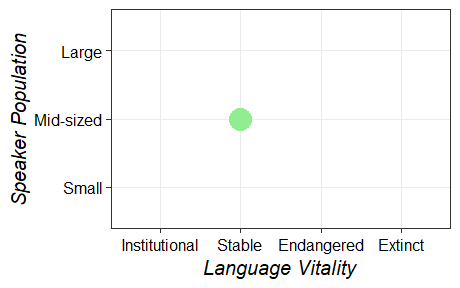 Click to enlarge with explanation
Place in Language Cloud
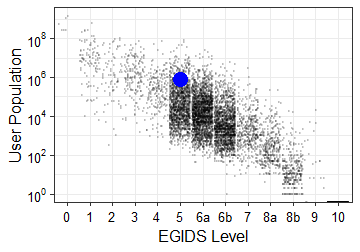 Click to enlarge with explanation