
IKE ISO 639-3
Inuktitut, Eastern Canadian
ᐃᓄᒃᑎᑐᑦ (Inuktitut) Autonym
A language of Canada
- ISO 639
- ike
- Alternate Names
- Canadian Inuit, Inuit, Inuit of Quebec, “Eastern Arctic Eskimo” (pej.), “Eastern Canadian Eskimo” (pej.)
- Autonym
- ᐃᓄᒃᑎᑐᑦ (Inuktitut)
- Population
- 35,200 (2016 census).
- Location:
- Newfoundland and Labrador, Nunavut, and Quebec provinces: Hudson Strait, east through Nunavut, southern Baffin Island; northern coastal settlements in Quebec, and along North Atlantic coast.
- Language Status
- 2 (Provincial). Statutory provincial language in Nunavut Territory (1988, Inuit Language Protection Act, Chapter 17). Statutory provincial working language in NWT (1988, NWT Official Languages Act, Chapter 56 (Supplemented), Section 4), restricted official use.
- Classification
- Eskimo-Aleut, Eskimo, Inuit-Inupiaq
- Dialects
- Quebec-Labrador Inuktitut (“Labrador Eskimo” (pej.), Labrador Inuktitut, Labrador Inuttitut, “Quebec Eskimo” (pej.), Rigolet Inuktitut, Tarramiut), Rigolet Inuktitut, Kivalliq, Baffin Inuktitut (Mittimatalik). A member of macrolanguage Inuktitut [iku].
- Typology
- SOV; dual number; polysynthetic; ergativity.
- Language Use
- Vigorous except in Labrador, where less than half are speakers. In Labrador average is over 20 years old; possibly a few children at Nain. Also use English [eng].
- Language Development
- Literacy rate in L1: 10%–30%. Literacy rate in L2: 75%–100%. Dictionary. Grammar. Texts. Bible: 1826–2012.
- Language Resources
- OLAC resources in and about Inuktitut, Eastern Canadian
- Writing
- Unified Canadian Aboriginal Syllabics script [Cans], uses eastern finals.
- Other Comments
- In Northern Quebec and the Northwest Territories to the Central Arctic, it is spoken by over 90% of the population. Inuit is the name of the people, Inuktitut of the language.
Also Spoken in
Map
Location: Newfoundland and Labrador, Nunavut, and Quebec provinces: Hudson Strait, east through Nunavut, southern Baffin Island; northern coastal settlements in Quebec, and along North Atlantic coast.
Size and Vitality
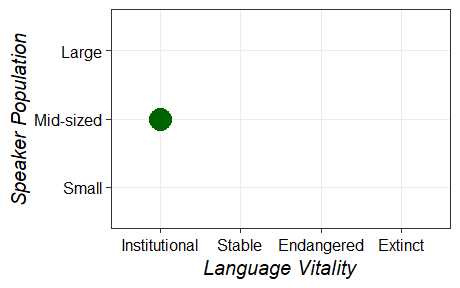 Click to enlarge with explanation
Place in Language Cloud
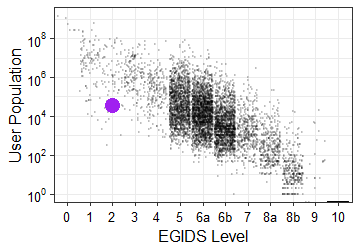 Click to enlarge with explanation