
HSB ISO 639-3
Sorbian, Upper
Hornjoserbsce, Hornjoserbšćina Autonym
A language of Germany
- ISO 639
- hsb
- Alternate Names
- Haut Sorabe, Hornjoserbska rěč, Hornjoserbski, Hornoserbski, Obersorbisch, Upper Lusatian, Wendish
- Autonym
- Hornjoserbsce, Hornjoserbšćina
- Population
- 13,300 (Salminen 2007). 20,000–30,000 total Sorbian, one-third in lower Lusatia and two-thirds in upper Lusatia (Salminen 2007). Ethnic population: 45,000.
- Location:
- Brandenburg state; Sachsen state: east Bautzen and Kamenz.
- Language Status
- 6b (Threatened). Statutory language of provincial identity in Sachsen (1992, Constitution, Article 6).
- Classification
- Indo-European, Balto-Slavic, Slavic, West, Sorbian
- Dialects
- Bautzen, Kamenz.
- Language Use
- Upper Sorbian and Lower Sorbian are 2 standard languages. Authorized in local government and schools. Increasing literature production. Now accepted as a minority language. 40,000–45,000 others have some knowledge of it. Some young people, all adults. Mostly older adults. Most monolinguals are very young (Stephens 1976). Also use Standard German [deu].
- Language Development
- Taught in primary schools. Newspapers. Radio. TV. Dictionary. Grammar. Texts. Bible: 1728–1857.
- Language Resources
- OLAC resources in and about Sorbian, Upper
- Writing
- Latin script [Latn].
- Other Comments
- Sorbian has lost much of its former public support after the unification of Germany. Many Sorbian schools have been closed (Salminen 2007).
Also Spoken in
Map
Location: Brandenburg state; Sachsen state: east Bautzen and Kamenz.
Size and Vitality
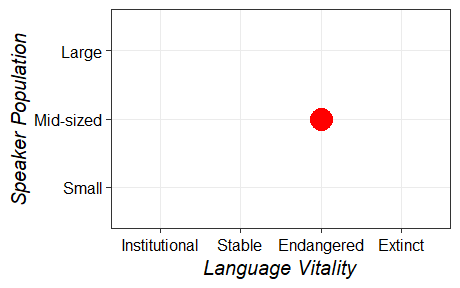 Click to enlarge with explanation
Place in Language Cloud
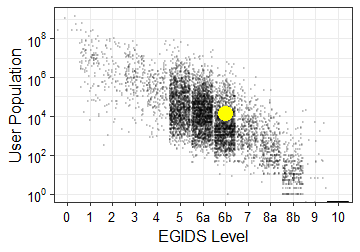 Click to enlarge with explanation