
HAJ ISO 639-3
Hajong
Hajong Bhasa, হৃজং ভাশা (Hajong Bhasa) Autonym
A language of India
- ISO 639
- haj
- Alternate Names
- Haijong, Hajang, Hazong
- Autonym
- Hajong Bhasa, হৃজং ভাশা (Hajong Bhasa)
- Population
- 71,800 in India (2011 census). Total users in all countries: 79,800.
- Location:
- Assam state: Goalpara, and Nagaon districts; Meghalaya state: West Garo Hills district, west side; West and East Khasi hills districts; Arunachal Pradesh and West Bengal states.
- Language Status
- 5* (Developing).
- Classification
- Indo-European, Indo-Iranian, Indo-Aryan, Outer Languages, Eastern, Bengali-Assamese
- Dialects
- Banai, Dalu. No prestige or standard dialect recognized. Intelligible with Hajong of Bangladesh. Lexical similarity: 82%–91% between Banai dialect of Koch [kdq] and mainstream Hajong varieties, 74%–77% between Dalu dialect and mainstream Hajong varieties, 79% between Banai dialect of Koch [kdq] and Dalu, 54%–64% with Assamese [asm], 63%–67% with Bengali [ben], 74%–85% with Hajong of Bangladesh.
- Language Use
- Vigorous. All domains. Positive attitudes. Also use Assamese [asm]. Educated have high fluency in Assamese. Also use Bengali [ben]. Also use English [eng]. Also use Garo [grt]. Used as L2 by Koch [kdq].
- Language Development
- Literacy rate in L2: 20%–25%; 48% for Meghalaya (2001 census). Literature. Radio. TV. Bible portions: 2010–2011.
- Language Resources
- OLAC resources in and about Hajong
- Writing
- Bengali (Bangla) script [Beng], used in Bangladesh and India. Latin script [Latn], used in India.
- Other Comments
- Jharua may be an alternate name. Though linguistically different, the Banai affiliate themselves with the Koch. Traditional religion, Hindu.
Also Spoken in
- Location
- Mymensingh division: Rangpur district east to Sunamganj district; Sylhet division.
- Language Status
- 5 (Developing)
- Other Comments
- Hindu. View other languages of Bangladesh
Language Name
Hajong
User Population
8,000 in Bangladesh.
Map
Location: Assam state: Goalpara, and Nagaon districts; Meghalaya state: West Garo Hills district, west side; West and East Khasi hills districts; Arunachal Pradesh and West Bengal states.
Size and Vitality
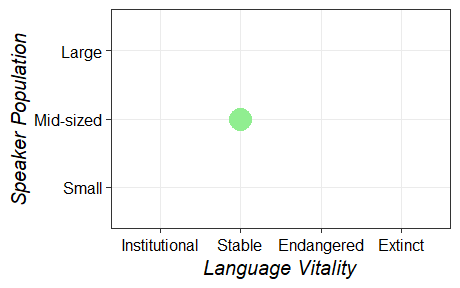 Click to enlarge with explanation
Place in Language Cloud
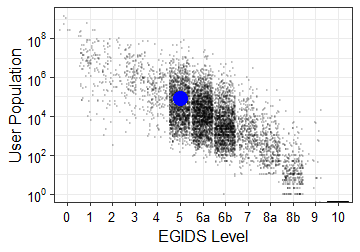 Click to enlarge with explanation