
GWI ISO 639-3
Gwich’in
Dinju Zhuh K’yuu Autonym
A language of Canada
- ISO 639
- gwi
- Alternate Names
- Kutchin, Loucheux, Takudh, Tukkuthkutchin, Tukudh
- Autonym
- Dinju Zhuh K’yuu
- Population
- 260 in Canada (2016 census). Ethnic population: 1,900 (Krauss 2007). Total users in all countries: 560.
- Location:
- Northwest Territories: Aklavik, Inuvik, Tsiigehtchic, Fort McPherson; Yukon Territory: Old Crow.
- Language Status
- 7 (Shifting). Statutory language of provincial identity in NWT (1988, NWT Official Languages Act, Chapter 56 (Supplemented), Section 4). Language of recognized indigenous peoples: Gwichya Gwich’in, Inuvik Native, Tetlit Gwich’in, Vuntut Gwitchin.
- Classification
- Eyak-Athabaskan, Athabaskan, Northern Athabaskan
- Dialects
- Fort Yukon Gwich’in, Arctic Village Gwich’in, Western Canada Gwich’in (Loucheux, Takudh, Tukudh), Arctic Red River.
- Language Use
- Still vigorous in a few communities. Taught in school at Old Crow since 1970s (Golla 2007). Adults only. All shifting to English [eng].
- Language Development
- Literacy rate in L1: 1%–5%. Literacy rate in L2: 50%–75%. Literature. Dictionary. Bible: 1898.
- Language Resources
- OLAC resources in and about Gwich’in
- Writing
- Latin script [Latn].
Also Spoken in
- Location
- Alaska: Arctic village, Birch Creek, Chalkyitsik, Circle, Fort Yukon, and Venetie; on Yukon river and tributaries.
- Dialects
- Arctic Red River, Arctic Village Gwich’in, Fort Yukon Gwich’in, Western Canada Gwich’in (Loucheux, Takudh, Tukudh).
- Language Status
- 7 (Shifting)
- Other Comments
- Non-indigenous. View other languages of United States
Language Name
Gwich’in
User Population
300 in United States (Golla 2007). Ethnic population: 1,000 (Krauss 2007).
Map
Location: Northwest Territories: Aklavik, Inuvik, Tsiigehtchic, Fort McPherson; Yukon Territory: Old Crow.
Size and Vitality
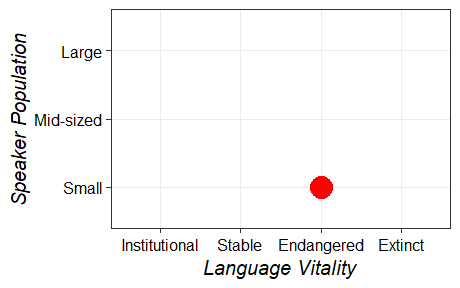 Click to enlarge with explanation
Place in Language Cloud
 Click to enlarge with explanation