
GLG ISO 639-3
Galician
Galego Autonym
A language of Spain
- ISO 639
- glg
- Alternate Names
- Gallego
- Autonym
- Galego
- Population
- 2,320,000 in Spain (European Commission 2012). Total users in all countries: 3,127,900.
- Location:
- Castille and Leon autonomous community: western Leon and Zamora provinces; western Asturias and Galicia autonomous communities.
- Language Status
- 2 (Provincial). Statutory provincial language in Galicia Autonomous Community (1981, Autonomy Statute, Act 1 of 6 April, Article 5).
- Classification
- Indo-European, Italic, Romance, Italo-Western, Western, Gallo-Iberian, Ibero-Romance, West Iberian, Portuguese-Galician
- Dialects
- Galician is reportedly between Portuguese [por] and Spanish [spa], but is more similar to Portuguese, which has about 85% intelligibility (1989 R. Hall). Many dialects.
- Language Use
- Also use Spanish [spa].
- Language Development
- Academy of the Galician Language. Decades of development as literary language, including poetry and essays for all levels of education. Dictionary. Grammar. Bible: 1989–1992.
- Language Resources
- OLAC resources in and about Galician
- Writing
- Latin script [Latn].
- Other Comments
- Growing sense of ethnic identity.
Also Spoken in
- Language Status
- 5 (Dispersed)
- Other Comments
- Non-indigenous. View other languages of Argentina
Language Name
Galician
User Population
752,000 in Argentina (2018). , based on nationality.
- Location
- Bragança and Vila Real districts: northern portions.
- Dialects
- Rionorese (Rionorês), Guadramilese (Guadramilês).
- Language Status
- 5 (Dispersed) View other languages of Portugal
Language Name
Galician
User Population
15,000 in Portugal (1994 SIL).
- Language Status
- Unestablished
- Other Comments
- Non-indigenous. View other languages of Uruguay
Language Name
Galician
User Population
40,900 in Uruguay (2016).
Map
Location: Castille and Leon autonomous community: western Leon and Zamora provinces; western Asturias and Galicia autonomous communities.
Size and Vitality
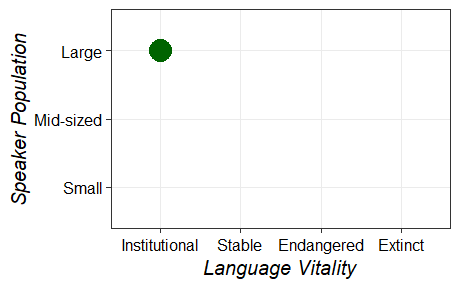 Click to enlarge with explanation
Place in Language Cloud
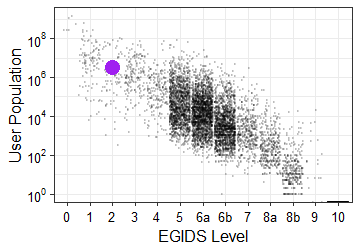 Click to enlarge with explanation