
EMI ISO 639-3
Mussau-Emira
Emira, Mussau Autonym
A language of Papua New Guinea
- ISO 639
- emi
- Alternate Names
- Emira-Mussau, Musao, Musau-Emira
- Autonym
- Emira, Mussau
- Population
- 6,000 (2015 SIL), increasing. Ethnic population: 6,000 (2015 SIL). Includes 3,500 in the traditional area (2015 J. Brownie).
- Location:
- New Ireland province: Emira, Mussau, and Saint Matthias Islands northwest of Kavieng; Goroka, Kavieng, Lae, Madang, and Port Moresby.
- Language Status
- 5 (Developing).
- Classification
- Austronesian, Malayo-Polynesian, Central-Eastern Malayo-Polynesian, Eastern Malayo-Polynesian, Oceanic, St. Matthias
- Dialects
- Emira (Emirau), Western Mussau, Southern Mussau, Eastern Mussau.
- Typology
- SVO; noun head initial; dual, trial and paucal numbers; causatives; 11 consonants and 5 vowels; stress on penultimate syllable; inclusive/exclusive pronouns; alienable/inalienable possession.
- Language Use
- Vigorous. Spoken by nearly all. Passed on to children in the traditional area, and some elsewhere, except in mixed marriages. Tenis ethnic group also uses Emira dialect. Most domains, local administration, commerce, education in early grades, oral and some written use in church, personal letters. Used by all. Positive attitudes. All also use Tok Pisin [tpi]. Most also use English [eng]. Used as L2 by Tenis [tns].
- Language Development
- Literacy rate in L1: 80%–95%. Literacy rate in L2: 80%–95% Tok Pisin [tpi] and English [eng]. Schooling declined for a few years from 1999 due to poor economy, and literacy rates then declined, but are now increasing again (2015 J. Brownie). Taught in primary schools. Literature. Dictionary. Grammar. NT: 2018.
- Language Resources
- OLAC resources in and about Mussau-Emira
- Writing
- Latin script [Latn].
- Other Comments
- Christian.
Also Spoken in
Map
Location: New Ireland province: Emira, Mussau, and Saint Matthias Islands northwest of Kavieng; Goroka, Kavieng, Lae, Madang, and Port Moresby.
Size and Vitality
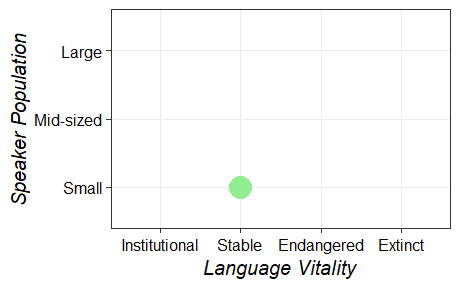 Click to enlarge with explanation
Place in Language Cloud
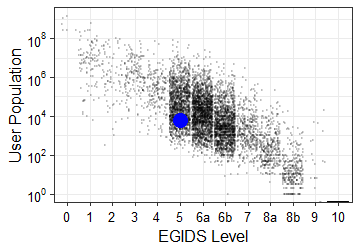 Click to enlarge with explanation