
EKY ISO 639-3
Kayah, Eastern
A language of Myanmar
- ISO 639
- eky
- Alternate Names
- Karenni, Karennyi, Kayah, Kayah Li, Kayay, Kayeh, Red Karen
- Population
- 8,000 in Myanmar (2007). Total users in all countries: 26,000.
- Location:
- Kayah state: Shadaw township east of Thanlwin river; Shan state: Langkho district.
- Language Status
- 6a (Vigorous).
- Classification
- Sino-Tibetan, Tibeto-Burman, Karenic, Central
- Dialects
- Upper Eastern Kayah, Lower Eastern Kayah. Upper Eastern Kayah and Lower Eastern Kayah are mutually intelligible; Huai Sua Thaw village (Lower Eastern) is prestigious in both dialect groups. Difficulty understanding Western Kayah [kyu].
- Language Use
- Vigorous. All domains. Used by all. Positive attitudes. Most also use S’gaw Karen [ksw]. Also use Burmese [mya], specifically among Buddhists and Roman Catholics. Also use Shan [shn]. Also use Thai [tha], in education of Kayah in permanent villages. Also use Western Kayah [kyu], in education in refugee camps.
- Language Development
- Grammar. Texts.
- Language Resources
- OLAC resources in and about Kayah, Eastern
- Writing
- Kayah Li script [Kali].
- Other Comments
- Buddhist, Christian, traditional religion.
Also Spoken in
- Location
- Mae Hong Son province.
- Language Status
- 6b (Threatened)
- Other Comments
- Strong feeling that all Kayah are the same ethnic group. Upper Eastern Kayah is north of Mae Hong Son provincial capital; Lower Eastern Kayah is south. Karieng Daeng means Red Karen in Thai [tha]. “Yang Daeng”, Red Karen in Northern Thai [nod], is pejorative. View other languages of Thailand
Language Name
Kayah, Eastern
User Population
18,000 in Thailand (2000). 2 camps of 15,000 refugees from Myanmar.
Map
Location: Kayah state: Shadaw township east of Thanlwin river; Shan state: Langkho district.
Size and Vitality
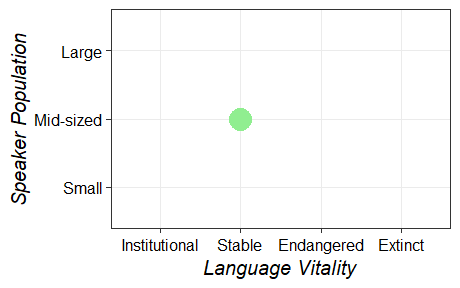 Click to enlarge with explanation
Place in Language Cloud
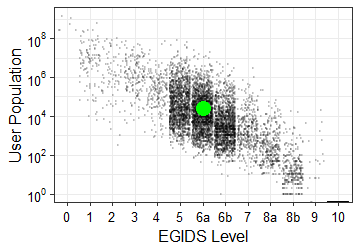 Click to enlarge with explanation