
DZO ISO 639-3
Dzongkha
རྫོང་ཁ་ (Dzongkha) Autonym
A language of Bhutan
- ISO 639
- dzo
- Alternate Names
- Bhotia of Bhutan, Bhotia of Dukpa, Bhutanese, Drukha, Drukke, Dukpa, Jonkha, Zongkhar
- Autonym
- རྫོང་ཁ་ (Dzongkha)
- Population
- 304,000 in Bhutan (2021 Joshua Project). , based on ethnicity. Total users in all countries: 315,080.
- Location:
- Haa, Paro, Punakha, and Wangdue Phodrang districts.
- Language Status
- 1 (National). Statutory national language (2008, Constitution, Article 1(8)).
- Classification
- Sino-Tibetan, Tibeto-Burman, Western Tibeto-Burman, Bodish, Central Bodish, Central, Southern
- Dialects
- Wang-The (Thimphu-Punakha), Ha, Northern Thimphu, Adap. As different from Central Tibetan [bod] as Nepali [npi] is from Hindi [hin]. Partially intelligible with Sikkimese [sip] (Denjoke). Dialects may be separate languages. Lexical similarity: 77% with Adap dialect, 48% with Tshangla [tsj], 47%–52% with Bumthangkha [kjz].
- Language Development
- Literacy rate in L1: 54%. Literacy rate in L2: Below 5%. Common school language. Literature. Radio. Dictionary. Grammar. Bible: 2010.
- Language Resources
- OLAC resources in and about Dzongkha
- Writing
- Tibetan script [Tibt], official usage.
- Other Comments
- Buddhist.
Also Spoken in
- Location
- West Bengal state: Darjeeling and Kalimpong, just inside the Indo-Bhutan border; Arunachal Pradesh, Assam, Manipur, Meghalaya, Nagaland, and Sikkim states.
- Language Status
- 5 (Dispersed)
- Other Comments
- Buddhist. View other languages of India
Language Name
Dzongkha
User Population
11,000 in India (2007).
Map
Location: Haa, Paro, Punakha, and Wangdue Phodrang districts.
Size and Vitality
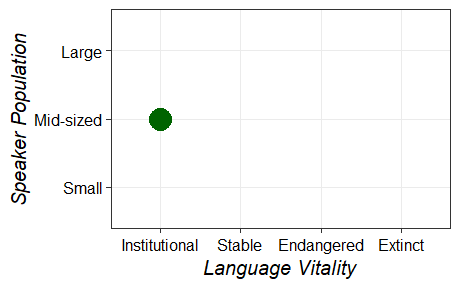 Click to enlarge with explanation
Place in Language Cloud
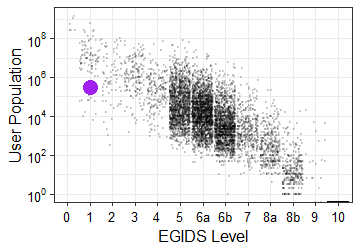 Click to enlarge with explanation