
DRY ISO 639-3
Darai
दरै (darai) Autonym
A language of Nepal
- ISO 639
- dry
- Autonym
- दरै (darai)
- Population
- 12,050, all users. L1 users: 11,700 (2011 census), decreasing. L2 users: 350 (2011 census). Very few monolinguals.
- Location:
- Bagmati province: Chitwan district, Bharatpur, Khairahani, Ratnanagar, and Rapti municipalities; Gandaki province: East Nawalparasi district, Bungdikali and Bulingtar municipalities; Tanahun district, Byas, Ghiring, and Rhishing municipalities.
- Language Status
- 6b (Threatened). Language of recognized indigenous nationality: Darai.
- Classification
- Indo-European, Indo-Iranian, Indo-Aryan, Unclassified
- Dialects
- Chitwan, Tanahun. Lexical similarity: 85%–90% with Bote [bmj].
- Typology
- SOV; postpositions; noun head final; 2 noun classes or genders; 1 prefix, up to 4 suffixes; clause constituents indicated by case-marking; verbal affixation marks for person and number; nominal-based split ergativity; both tense and aspect; passives and voice; nontonal; 29 consonant and 6 vowel phonemes; head-marking of noun in genitive construction.
- Language Use
- Rapidly assimilating to Nepali [npi] (Van Driem 2007). Home; mixed use: Friends, religion, work. Some young people, all adults. Positive attitudes. Most also use Nepali [npi].
- Language Development
- Newspapers. Periodicals. Radio. Videos. Dictionary. Grammar. Texts.
- Language Resources
- OLAC resources in and about Darai
- Writing
- Devanagari script [Deva], used since 2014.
- Other Comments
- Darai do not have social subdivisions found in most other Nepali groups. They do not organize communities into social, religious, economic, or political organizations (Bista 1996). Hindu.
Also Spoken in
Map
Location: Bagmati province: Chitwan district, Bharatpur, Khairahani, Ratnanagar, and Rapti municipalities; Gandaki province: East Nawalparasi district, Bungdikali and Bulingtar municipalities; Tanahun district, Byas, Ghiring, and Rhishing municipalities.
Size and Vitality
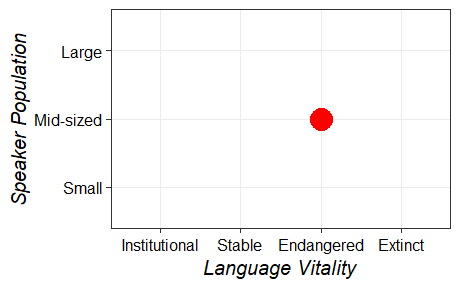 Click to enlarge with explanation
Place in Language Cloud
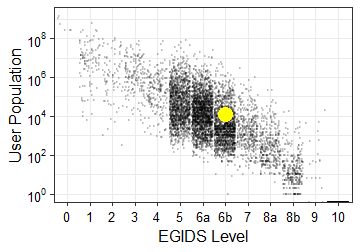 Click to enlarge with explanation