
DIH ISO 639-3
Kumiai
A language of Mexico
- ISO 639
- dih
- Alternate Names
- Campo, Cochimí, Comeya, Cuchimí, Diegueño, Jamul Diegueño, Jamul Tiipay, Kamia, Kamiai, Kamiyahi, Kamiyai, Ki-Miai, Ko’al, Ku’ahl, Kumeyaai, Kumeyaay, Kumia, Kw’aal, Quemayá, Tiipay, Tipai’, Tipái, Tipéi
- Population
- 290 in Mexico (2011 UNSD). No monolinguals (1993). Total users in all countries: 440.
- Location:
- Baja California state: Cañon de los Encinos, Ja’áa, La Huerta de los Indios, Rancho Nejí, San Antonio Nécua, and San José de la Zorra; mountains southeast of Tecate, 60 km east of Ensenada.
- Language Status
- 8a (Moribund).
- Classification
- Cochimí-Yuman, Yuman, Delta-California
- Typology
- Case-marking; 26 consonants and 9 vowels; alienable/inalienable possession.
- Language Use
- Shifted to Spanish [spa].
- Language Development
- Dictionary. Grammar. Texts.
- Language Resources
- OLAC resources in and about Kumiai
- Writing
- Unwritten [Qaax].
- Other Comments
- Different from the extinct Cochimí language.
Also Spoken in
- Location
- California: east of San Diego and some in Imperial Valley.
- Dialects
- Ipai, Tipai (Jamul Tiipay), Kumeyaay.
- Language Status
- 8a (Moribund) View other languages of United States
Language Name
Kumiai
User Population
150 in United States (Golla 2007). 40–50 fluent speakers of Kumeyaay, 100 speakers of Tipai, a few elderly people speak Ipai (Golla 2007).
Map
Location: Baja California state: Cañon de los Encinos, Ja’áa, La Huerta de los Indios, Rancho Nejí, San Antonio Nécua, and San José de la Zorra; mountains southeast of Tecate, 60 km east of Ensenada.
Size and Vitality
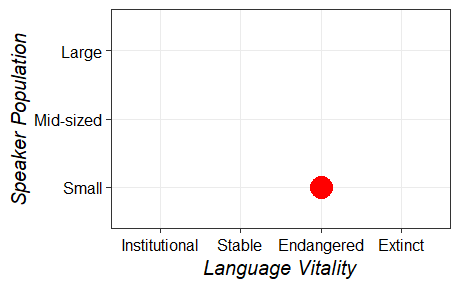 Click to enlarge with explanation
Place in Language Cloud
 Click to enlarge with explanation