
COT ISO 639-3
Caquinte
Aguenquetsatsare Autonym
A language of Peru
- ISO 639
- cot
- Alternate Names
- Caquinte Campa, Kakinte, Poyenisati, “Cachomashiri” (pej.)
- Autonym
- Aguenquetsatsare
- Population
- 440 (2007 census), increasing. Ethnic population: 440 (2007 census).
- Location:
- Cusco and Junin regions: Picha, Poyeni, and Mayapo rivers, upper Poyeni river, which flows into Tambo Yori and Agueni rivers which become Mipaya river flowing into the Urubamba; a few on Sensa and Vitiricaya rivers, affluents of the Urubamba.
- Language Status
- 5 (Developing).
- Classification
- Maipurean, Southern, Campa, Machiguenga
- Dialects
- None known. Reportedly most similar to Asháninka [cni].
- Typology
- VSO; 18 consonants and 8 vowels (4 short, 4 long).
- Language Use
- Vigorous. State bilingual school in Tsoroja (Crevels 2007). Some borrowing from Asháninka [cni] and Matsigenka [mcb]. Religious services. Mostly spoken in the local community. Letter-writing between villages. Used by all. Positive attitudes. A few also use Spanish [spa]. Also use Asháninka [cni]. Also use Matsigenka [mcb].
- Language Development
- Literacy rate in L1: 33%. Literacy rate in L2: Below 5%. 100 readers and writers. Taught in primary schools. Grammar. NT: 2005–2008.
- Language Resources
- OLAC resources in and about Caquinte
- Writing
- Latin script [Latn].
Also Spoken in
Map
Location: Cusco and Junin regions: Picha, Poyeni, and Mayapo rivers, upper Poyeni river, which flows into Tambo Yori and Agueni rivers which become Mipaya river flowing into the Urubamba; a few on Sensa and Vitiricaya rivers, affluents of the Urubamba.
Size and Vitality
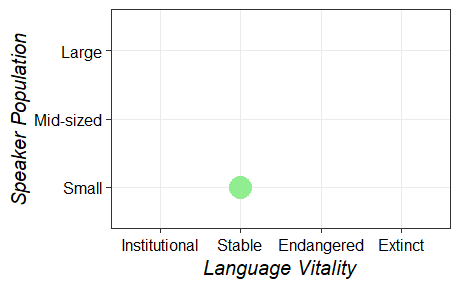 Click to enlarge with explanation
Place in Language Cloud
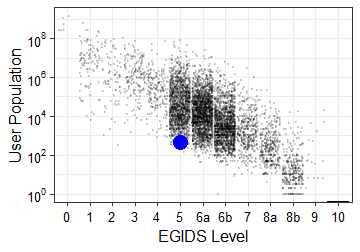 Click to enlarge with explanation