
CLC ISO 639-3
Chilcotin
Tŝinlhqot’in Autonym
A language of Canada
- ISO 639
- clc
- Alternate Names
- Nenqayni Ch’ih, Tsilhqút’ín, Tzilkotin
- Autonym
- Tŝinlhqot’in
- Population
- 860 (FPCC 2014). 760 semi-speakers (FPCC 2014). 100 monolinguals. Ethnic population: 4,350 (FPCC 2014).
- Location:
- British Columbia province: west of Williams Lake. 7 reserve communities: Alexandria, Anahim, Nemiah, Redstone, Stone, Toosey, Ulkatcho.
- Language Status
- 7 (Shifting). Language of recognized indigenous peoples: Alexis Creek, Tl’etinqox Government, Toosey, Xeni Gwet’in First Nations Government, Yunesit’in Government.
- Classification
- Eyak-Athabaskan, Athabaskan, Northern Athabaskan
- Typology
- SOV.
- Language Use
- Preferred by adults. Adolescents to elderly. Most children prefer English [eng]. Grandparents pass the language to some children. Many decry the perceived loss of Chilcotin among the younger generation. A small number of English speakers (mostly missionaries) have made attempts to learn Chilcotin. The Chilcotin Language Committee oversees teaching of Chilcotin in schools and encourages language and cultural awareness activities. Shifting to English [eng]. Some also use Southern Carrier [caf].
- Language Development
- Literacy rate in L1: 25%. Literacy rate in L2: 25%–50%. Taught in primary schools. Dictionary. Grammar. Bible portions: 1993. Agency: Chilcotin Language Committee.
- Language Resources
- OLAC resources in and about Chilcotin
- Writing
- Latin script [Latn].
- Other Comments
- Christian.
Also Spoken in
Map
Location: British Columbia province: west of Williams Lake. 7 reserve communities: Alexandria, Anahim, Nemiah, Redstone, Stone, Toosey, Ulkatcho.
Size and Vitality
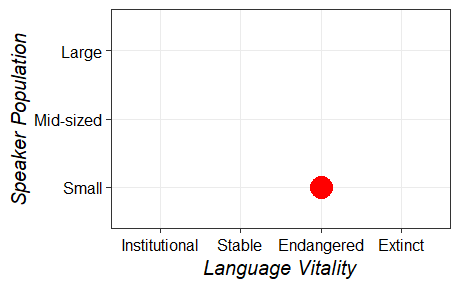 Click to enlarge with explanation
Place in Language Cloud
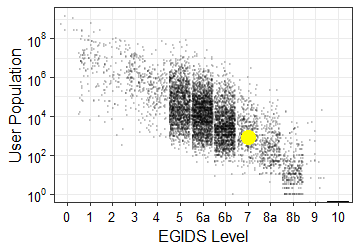 Click to enlarge with explanation