
BYW ISO 639-3
Belhariya
A language of Nepal
- ISO 639
- byw
- Alternate Names
- Athpagari, Athpahariya, Athpare, Athpariya, Belhare
- Population
- 612, all users. L1 users: 600 (2011 census), decreasing. L2 users: 12 (2011 census).
- Location:
- Kosi province: Dhankuta district, Dhankuta municipality, Belhara village and in the hills west of Dhankuta bazaar.
- Language Status
- 6b (Threatened). Language of recognized indigenous nationality: Rai.
- Classification
- Sino-Tibetan, Tibeto-Burman, Western Tibeto-Burman, Himalayan, Kiranti, Eastern
- Dialects
- None known. Different from Athpariya [aph], although also called and closely related to it (Winter and Hansson 1991). Not intelligible with Athpariya although Athpariya speakers claim full intelligibility (Bickel 1996:21).
- Typology
- SOV; postpositions; noun head final; no genders; content q-word in situ; up to 3 prefixes, up to 10 suffixes, and several clitics; clause constituents indicated by case-marking; verbal affixation marks person and number; ergativity; passives and voice; nontonal; 22 consonant and 8 vowel phonemes.
- Language Use
- Many parents only use Nepali [npi] with their children, citing advantages for economic and social success. Religion; mixed use: Home, friends, work. Some young people, all adults. Adults and elderly. Some use among children and adolescents. Negative attitudes. Also use Nepali [npi].
- Language Development
- About 5 speakers are literate in their mother tongue. Dictionary.
- Language Resources
- OLAC resources in and about Belhariya
- Writing
- Devanagari script [Deva], recently developed.
- Other Comments
- Athpare refers to the ethnic group made up of Belhare and Athpariya which have close cultural ties, but who recognize their linguistic differences. They clarify by calling the Dhankuta people Noupagari and the Belhare people Athpagari (Bickel 1996). Traditional religion, Hindu.
Also Spoken in
Map
Location: Kosi province: Dhankuta district, Dhankuta municipality, Belhara village and in the hills west of Dhankuta bazaar.
Size and Vitality
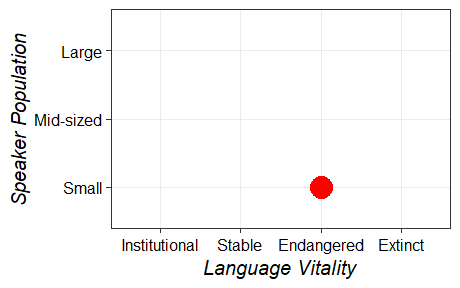 Click to enlarge with explanation
Place in Language Cloud
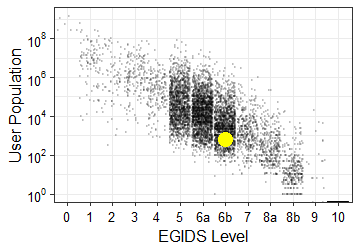 Click to enlarge with explanation