
BUS ISO 639-3
Bokobaru
Zogben Autonym
A language of Nigeria
- ISO 639
- bus
- Alternate Names
- Bariba, Busa-Bokobaru, Bussanchi, Bussawa, Zogbeya, Zogbme, Zugweya
- Autonym
- Zogben
- Population
- 62,000 (2012 R. Jones). 10,800 in Kaiama, 51,200 in surrounding villages.
- Location:
- Kwara state: Kaiama LGA, some in Baruten LGA; 35 villages.
- Language Status
- 5 (Developing).
- Classification
- Niger-Congo, Mande, Eastern, Eastern, Busa
- Dialects
- Kaiama, village Bokobaru. Kaiama dialect speakers and those in other villages have good mutual inherent intelligibility. Distinct from Boko [bqc] of Benin or Busa [bqp]. Lexical similarity: 86% with Boko [bqc], 91% with Bisã [bqp], 62% with Kyanga [tye], 54% with Shanga [sho], 50% with Bisa [bib] of Burkina Faso and Ghana.
- Typology
- SOV; genitives before noun heads; articles, adjective, numerals, relatives after noun heads; question word initial or final; 4 suffixes; word order distinguishes subject, object, indirect object; postpositions; person, number, aspect included in subject pronouns; tone changes some verb aspect; passives; CV, CVV, CCV; tonal.
- Language Use
- Used by all. Positive attitudes. Also use Baatonum [bba]. Also use English [eng]. Also use Hausa [hau]. Also use Nigerian Fulfulde [fuv]. Also use Yoruba [yor].
- Language Development
- Literacy rate in L2: 10%. Literacy materials available. Low motivation. Dictionary. NT: 2005.
- Language Resources
- OLAC resources in and about Bokobaru
- Writing
- Latin script [Latn], used since 2007.
- Other Comments
- Ethnic autonyms, often used interchangeably: Bokobaru, especially for Kaiama town people, and Zogben, peasant, for village people. The Hausa call several groups of people (Boko, Bokobaru, Busa, Bariba) Bussawa, while the Yoruba call them all Bariba. Glossonym: Bussanchi by the Hausa. Muslim, traditional religion.
Also Spoken in
Map
Location: Kwara state: Kaiama LGA, some in Baruten LGA; 35 villages.
Size and Vitality
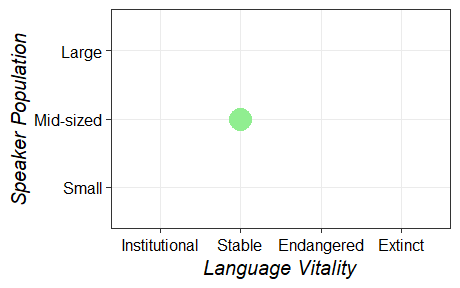 Click to enlarge with explanation
Place in Language Cloud
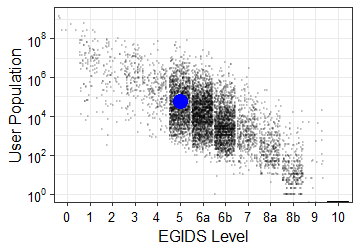 Click to enlarge with explanation