
BUM ISO 639-3
Bulu
Bulu Autonym
A language of Cameroon
- ISO 639
- bum
- Alternate Names
- Boulou
- Autonym
- Bulu
- Population
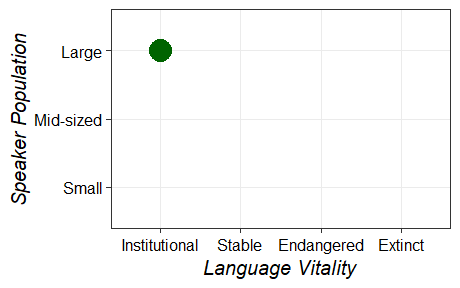
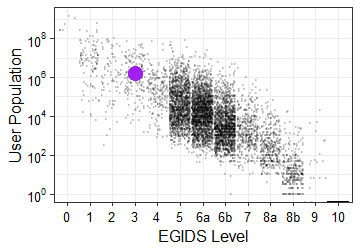
- 1,658,000, all users. L1 users: 858,000 (2007). L2 users: 800,000 (1991 UBS).
- Location:
- Centre region: southern Upper Sanaga division, northern Nyong-and-Mfoumou division; East region: western tip Upper Nyong division; South region: northern Mvila and Dja-and-Lobo divisions, into Océan division.
- Language Status
- 3 (Wider communication). Migrated in 1883 from Nubia, between southern Egypt and central Sudan, and settled in the Centre Province of Cameroon. Spread through the work of Protestant missionaries who chose it as a church language in 1887 and established Bulu schools at many locations. Used in church, commerce, and education. Currenlty used as LWC throughout much of the South region and some in the East.
- Classification
- Niger-Congo, Atlantic-Congo, Volta-Congo, Benue-Congo, Bantoid, Southern, Narrow Bantu, Northwest, A, Ewondo-Fang (A.74)
- Dialects
- Yelinda, Yembana, Yengono, Bene. Intelligible with Eton [eto], Ewondo [ewo], and Fang [fan] in Beti group.
- Language Use
- Most also use Ewondo [ewo]. Most also use French [fra], mostly for official purposes in the Centre, East, and South Regions. Many also use Eton [etn]. A few also use Cameroon Pidgin [wes]. A few also use English [eng]. A few also use Yasa [yko]. Used as L2 by Batanga [bnm], Elip [ekm], Gyele [gyi], Kol [biw], Kwasio [nmg], Mmaala [mmu], Swo [sox], Yangben [yav], Yasa [yko].
- Language Development
- Dictionary. Grammar. Texts. Bible: 1940–2004.
- Language Resources
- OLAC resources in and about Bulu
- Writing
- Latin script [Latn].
Also Spoken in
Map
Location: Centre region: southern Upper Sanaga division, northern Nyong-and-Mfoumou division; East region: western tip Upper Nyong division; South region: northern Mvila and Dja-and-Lobo divisions, into Océan division.
Size and Vitality
 Click to enlarge with explanation
Place in Language Cloud
 Click to enlarge with explanation