
BOD ISO 639-3
Tibetan, Central
བོད་ཡིག། (bod.yig), བོད་སྐད། (bod.skad) Autonym
A language of China
- ISO 639
- bod
- Alternate Names
- Bhotia, Lhasa Tibetan, Literary Tibetan, Phoke, Tibetan, Wei, Weizang, Zang
- Autonym
- བོད་ཡིག། (bod.yig), བོད་སྐད། (bod.skad)
- Population
- 1,070,000 in China (1990 census). 570,000 Dbus, 460,000 Gtsang, 40,000 Mngahris out of 4,593,000 in the official nationality. 920,000 monolinguals. Ethnic population: 6,280,000 (2010 census). Includes 24 Tibetan languages. Total users in all countries: 1,186,710 (as L1: 1,186,020; as L2: 690).
- Location:
- Xizang Autonomous Region; some in Xinjiang Uyghur Autonomous Region.
- Language Status
- 2 (Provincial). Language of recognized nationality: Tibetan.
- Classification
- Sino-Tibetan, Tibeto-Burman, Western Tibeto-Burman, Bodish, Central Bodish, Central
- Dialects
- Gtsang (Lhasa, Tsang), Dbus (Dbusgtsang, Ü), Mngahris (Ngari). In the exile community a so-called diaspora Tibetan has developed. Lexical similarity: 86% with Khams Tibetan [khg], 75% with Amdo Tibetan [adx] (Shearer and Sun 2017).
- Typology
- SOV; noun head initial; definite and indefinite articles; ergativity; comparatives; 28 consonant and 16 vowel phonemes; tonal (4 tones); 2 levels of honorifics.
- Language Use
- Vigorous. Speakers of other languages in the area can also speak Tibetan. All domains. Used by all. Positive attitudes. Also use Mandarin Chinese [cmn]. Also use Narua [nru]. Also use Naxi [nxq]. Used as L2 by Boga’er Luoba [adi], Cuona Monba [twm], Darang Deng [mhu], Geman Deng [mxj], Horpa [ero], Jiarong [jya], Kangjia [kxs], Lisu [lis], Namuyi [nmy], Naxi [nxq], Northern Pumi [pmi], Salar [slr], Shuhi [sxg], Southern Pumi [pmj], Tshangla [tsj], Tu [mjg], Yidu Luoba [clk].
- Language Development
- Literacy rate in L2: 30%. Motivation for literacy is high. Modern Literary Tibetan [bod] is the language of literature for other Tibetan varieties, including Khams Tibetan [khg] and Amdo Tibetan [adx]. Taught in primary and secondary schools. Newspapers. Periodicals. Radio. Dictionary. Grammar. Bible: 1948.
- Language Resources
- OLAC resources in and about Tibetan, Central
- Writing
- Marchen script [Marc]. Phags-pa script [Phag]. Tibetan script [Tibt], Uchen and Umed styles.
- Other Comments
- Xifan (Hsifan) and Bhotia are general terms for Tibetan. Probably includes many languages: Groma, Niarong, Lhomi, Panang, Sherpa, Tseku, Tinan Lahul. Nomads in central and northern Tibet in Phala on the 4,500-meter Chang Tang plateau are known as Drokba. They number around 500,000. Written Tibetan is reportedly based on a southern dialect. Buddhist, Muslim.
Also Spoken in
- Language Status
- Unestablished
- Other Comments
- Non-indigenous. View other languages of Canada
Language Name
Tibetan, Central
User Population
6,170 in Canada (2016 census).
- Language Status
- Unestablished
- Other Comments
- Non-indigenous. View other languages of Switzerland
Language Name
Tibetan
User Population
1,430 in Switzerland (2000).
- Location
- Himachal Pradesh state: Tibet border; Arunachal Pradesh, Assam, Delhi, Sikkim, and Uttarakhand states.
- Dialects
- Aba (Batang), Dartsemdo (Tatsienlu), Dru, Gtsang, Hanniu, Kongbo, Nganshuenkuan (Anshuenkuan Nyarong), Panakha-Panags, Paurong.
- Language Status
- 5 (Dispersed)
- Other Comments
- In Himalayan countries, ‘Bhotiya’, people of Tibetan origin, and is applied to various languages. Buddhist. View other languages of India
Language Name
Tibetan
User Population
83,800 in India (2011 census).
- Location
- Bagmati province: mainly Kathmandu and Pokhara; small refugee communities in the mountain belt (e.g. Solukhumbu, Rasuwa, Manang and Mustang).
- Dialects
- Utsang, Diaspora Tibetan.
- Language Status
- 3 (Wider communication)
- Other Comments
- Non-indigenous. Buddhist, Christian. View other languages of Nepal
Language Name
Tibetan
User Population
5,140 in Nepal, all users. L1 users: 4,450 in Nepal (2011 census), increasing. L2 users: 690 (2011 census).
- Language Status
- Unestablished
- Other Comments
- Non-indigenous. View other languages of China–Taiwan
Language Name
Tibetan
User Population
2,000 in China–Taiwan (2017 J. Leclerc).
- Location
- California; Colorado; Illinois; Massachusetts; Minnesota; New Jersey; New Mexico; New York; Oregon; Texas; Utah; Vermont; Virginia; Washington; Wisconsin.
- Language Status
- Unestablished
- Other Comments
- Non-indigenous. View other languages of United States
Language Name
Tibetan
User Population
16,700 in United States (2015 census). Census does not distinguish between different Tibetan languages.
Map
Location: Xizang Autonomous Region; some in Xinjiang Uyghur Autonomous Region.
Size and Vitality
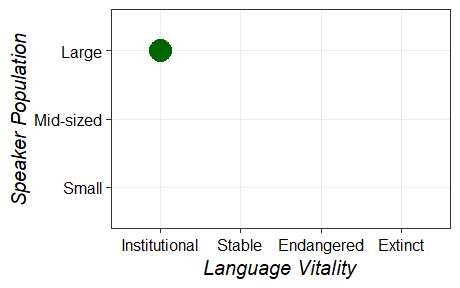 Click to enlarge with explanation
Place in Language Cloud
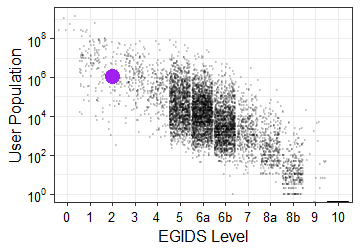 Click to enlarge with explanation