
BOB ISO 639-3
Aweer
Af Aweera Autonym
A language of Kenya
- ISO 639
- bob
- Alternate Names
- Aweera, Bon, Ogoda, Waboni, Wata-Bala, “Boni” (pej.), “Sanye” (pej.)
- Autonym
- Af Aweera
- Population
- 7,600 (2009 census), increasing. 1,600 monolinguals. Ethnic population: 20,100 (2019 census).
- Location:
- Garissa county: north and west of Mundane range; Lamu county: Indian Ocean area inland north of Lamu city; Tana River county: forests inland from Kipini city; 11 villages or more.
- Language Status
- 6a (Vigorous).
- Classification
- Afro-Asiatic, Cushitic, East, Rendille-Boni
- Dialects
- None known. Lexical similarity: with Rendille [rel] of Marsabit County (most similar).
- Language Use
- Vigorous. Home, community. Used by all. Positive attitudes. Also use English [eng]. Also use Orma [orc]. Also use Somali [som]. Also use Swahili [swh].
- Language Development
- Literacy rate in L1: 1% (2007 BTL). Literacy rate in L2: 40% or less in Kiswahili [swh] or English [eng] (2007 BTL). Many suspicious of literacy as colonizing force.
- Language Resources
- OLAC resources in and about Aweer
- Writing
- Latin script [Latn].
- Other Comments
- Different from Sanye [ssn] (Waat) of the Oromo Group or Dahalo [dal] (Sanye) of Southern Cushitic. Also referred to as “Sanye”, a pejorative term meaning hunter-gatherer group. Being settled in scattered villages and encouraged to switch to farming. Muslim.
Also Spoken in
Map
Location: Garissa county: north and west of Mundane range; Lamu county: Indian Ocean area inland north of Lamu city; Tana River county: forests inland from Kipini city; 11 villages or more.
Size and Vitality
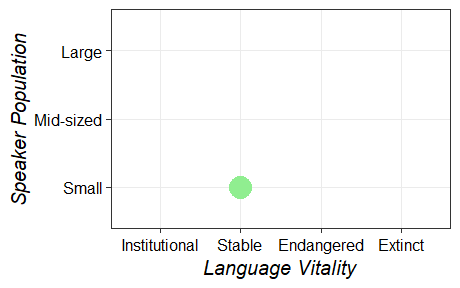 Click to enlarge with explanation
Place in Language Cloud
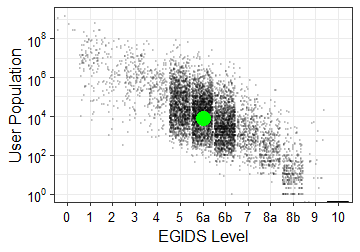 Click to enlarge with explanation