
BHW ISO 639-3
Biak
Wós Kovedi, Wós Vyak Autonym
A language of Indonesia
- ISO 639
- bhw
- Alternate Names
- Bahasa Biak, Biak-Numfor, Mafoor, Mafoorsch, Mefoor, Myfoorsch, Noefoor, Noefoorsch, Nufoor
- Autonym
- Wós Kovedi, Wós Vyak
- Population
- 70,000 (van den Heuvel 2007).
- Location:
- Papua province: Biak Numfor regency, Biak and Numfor islands; Yapen Island regency, north coast area; West Papua province: Mapia islands; Raja Ampat regency, Bantanta and south Waigeo islands; numerous island communities, east, north, and west of Bird’s Head.
- Language Status
- 6b* (Threatened).
- Classification
- Austronesian, Malayo-Polynesian, Central-Eastern Malayo-Polynesian, Eastern Malayo-Polynesian, South Halmahera-West New Guinea, West New Guinea, Cenderawasih Bay, Biakic
- Dialects
- Ariom, Bo’o, Dwar, Fairi, Jenures, Korim, Mandusir, Mofu, Opif, Padoa, Penasifu, Samberi, Sampori (Mokmer), Sor, Sorendidori, Sundei, Wari, Wadibu, Sorido, Bosnik, Korido, Warsa, Wardo, Kamer, Mapia, Mios Num, Rumberpon, Monoarfu, Yobi (Jobi). Some consider Biak and Numfor dialect 2 languages.
- Typology
- SVO; prepositions; dual number; animate/inanimate nouns; verbs marked for number and gender of subject; 13 consonants and 10 vowels (5 short, 5 long); alienable/inalienable possession; inclusive/exclusive pronouns.
- Language Use
- Only minor differences between dialects (van den Heuvel 2006). All also use Papuan Malay [pmy] (van den Heuvel 2006). Some also use Indonesian [ind] (van den Heuvel 2006). Used as L2 by Mapia [mpy].
- Language Development
- NT: 1990.
- Language Resources
- OLAC resources in and about Biak
- Writing
- Latin script [Latn].
- Other Comments
- Christian, traditional religion.
Also Spoken in
Map
Location: Papua province: Biak Numfor regency, Biak and Numfor islands; Yapen Island regency, north coast area; West Papua province: Mapia islands; Raja Ampat regency, Bantanta and south Waigeo islands; numerous island communities, east, north, and west of Bird’s Head.
Size and Vitality
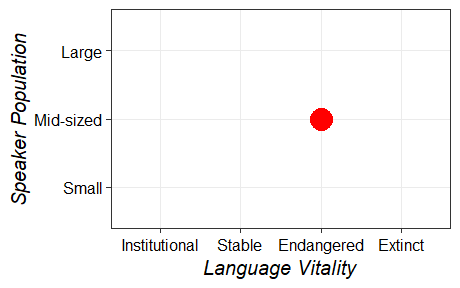 Click to enlarge with explanation
Place in Language Cloud
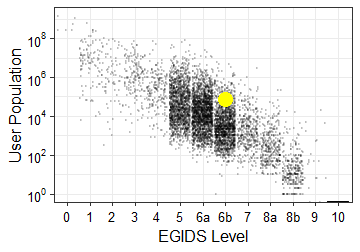 Click to enlarge with explanation